What Is Dogecoin (DOGE)? How It Works, Uses and Risks
Dogecoin is a proof-of-work cryptocurrency launched in 2013 as a meme. It has 1-minute blocks, a fixed 10,000 DOGE block reward and no maximum supply.
In this guide
- What Is Dogecoin? The Short Version
- Who Created Dogecoin? Origin and History
- How Does Dogecoin Work?
- Dogecoin Supply: Why There Is No Cap
- What Is Dogecoin Used For?
- The Dogecoin Ecosystem
- Dogecoin vs Bitcoin vs Litecoin
- How to Buy and Store Dogecoin
- Is Dogecoin a Good Investment? Key Risks
- Bottom Line
- Sources
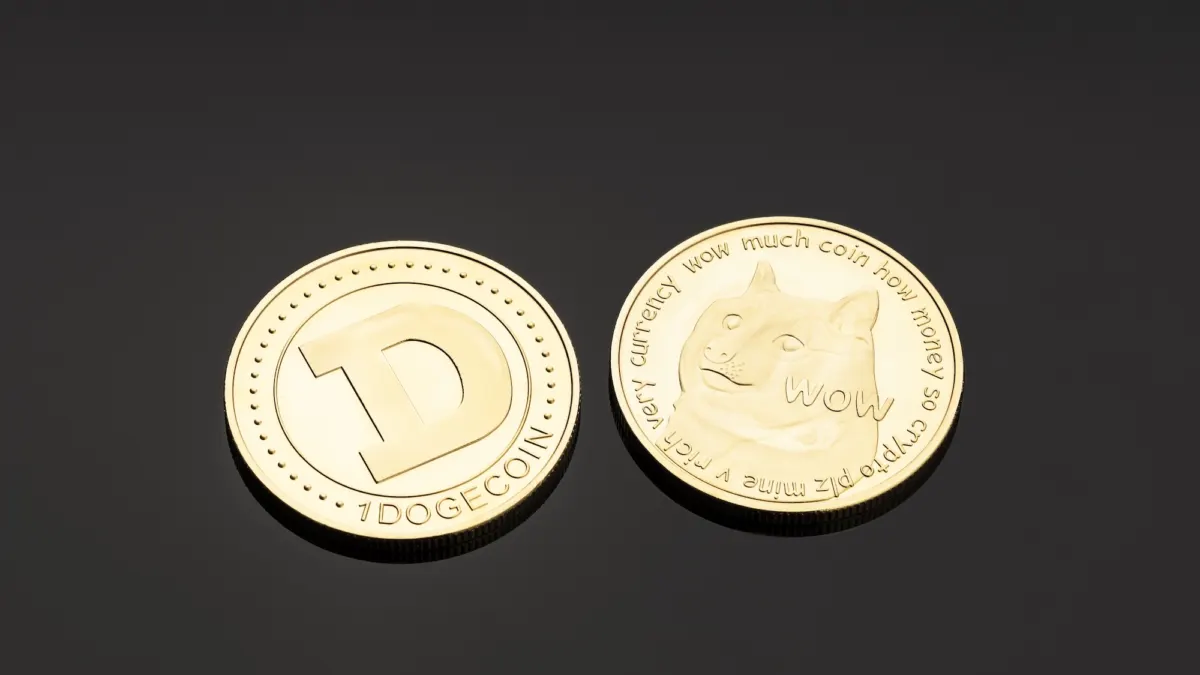
Dogecoin (DOGE) is a proof-of-work cryptocurrency that started in 2013 as a joke based on the “Doge” Shiba Inu meme and grew into one of the ten largest cryptocurrencies by market value. If you are asking “what is Dogecoin?”, the short answer is: a fast, low-fee payment coin with no supply cap, technically close to Litecoin, whose price is driven far more by community and celebrity attention than by technology.
Dogecoin was the original memecoin, a cryptocurrency whose popularity comes mainly from internet culture. Unlike most newer memecoins, though, it runs on its own blockchain with real miners, has more than a decade of operating history, and since 2025 trades through US-listed exchange-traded funds.
This guide explains how Dogecoin works, why it has no maximum supply, what people actually use it for, how it compares with Bitcoin and Litecoin, how to buy and store it, and the risks to understand before you hold any.
What Is Dogecoin? The Short Version
- Type: a standalone layer 1 cryptocurrency with its own blockchain. It does not run smart contracts.
- Consensus: proof of work using the Scrypt algorithm, merge-mined with Litecoin.
- Block time: about 1 minute, ten times faster than bitcoin.
- Block reward: a fixed 10,000 DOGE per block.
- Supply: no hard cap; about 5.26 billion new DOGE are created every year.
- Smallest unit: 1 DOGE = 100 million “koinu” (0.00000001 DOGE), the same divisibility as bitcoin’s satoshi.
In other words, Dogecoin is a simple payment coin. What makes it unusual is not its code but its culture, its unlimited supply, and how strongly its price reacts to social media.
Who Created Dogecoin? Origin and History
Dogecoin was created by two software engineers: Billy Markus, then at IBM in Portland, Oregon, and Jackson Palmer, then at Adobe in Sydney, Australia. Palmer bought the dogecoin.com domain as a joke about the many “me-too” coins of 2013, and Markus wrote the code. The network launched on December 6, 2013.
The code was a fork (a modified copy) of Luckycoin, which was itself based on Litecoin. Key moments since then:
- Early 2014: the community raised DOGE to send the Jamaican bobsled team to the Sochi Winter Olympics and sponsored a NASCAR car, cementing its “fun and generous” reputation. The planned 100 billion cap was dropped in favor of a permanent fixed reward.
- September 2014: merged mining with Litecoin went live, which sharply increased the hashing power securing Dogecoin.
- 2015: both founders had stepped away. Palmer later became a vocal critic of crypto speculation.
- 2021: the price rose more than 10,000% within months, helped by Reddit, retail trading apps and repeated posts by Elon Musk, peaking at about $0.73 in May 2021. The Dogecoin Foundation was revived the same year to support development.
- 2025: the first US exchange-traded funds holding DOGE launched: the REX-Osprey DOGE ETF in September and the Grayscale Dogecoin Trust ETF (GDOG) on November 24, 2025.
How Does Dogecoin Work?
Dogecoin works much like bitcoin. Users broadcast transactions, miners bundle them into blocks, and the chain of blocks forms a public ledger anyone can verify. If you are new to these ideas, read our explainer on how bitcoin works first; most of it applies here.
Scrypt proof of work
Miners compete to find a valid hash (a cryptographic fingerprint) for the next block using the Scrypt algorithm, which was designed to need more memory than bitcoin’s SHA-256. Today Scrypt is mined mostly with specialized ASIC machines. The winning miner receives the block reward plus fees. Our guide to crypto mining covers the economics.
Merged mining with Litecoin
Since 2014, Dogecoin has allowed merged mining (also called auxiliary proof of work). A Litecoin miner can submit the same work to both networks at once and earn rewards on each without extra computation. As a result, most of Dogecoin’s security comes from the large pool of Litecoin miners, which makes a 51% attack (one party controlling most of the hash power) far more expensive than Dogecoin’s size alone would suggest.
Fast blocks and difficulty
Dogecoin targets a 1-minute block time and adjusts mining difficulty every block, using an algorithm called DigiShield. Fast blocks mean quicker first confirmations, though merchants receiving large payments usually wait for several confirmations.
Fees
Fees are paid per kilobyte of transaction data. Since Dogecoin Core 1.14.4 in 2021, the recommended minimum fee has been 0.01 DOGE per kilobyte, so a typical transfer costs a small fraction of a DOGE. Exchanges usually charge their own, higher withdrawal fees on top.
Dogecoin Supply: Why There Is No Cap
Bitcoin has a hard cap of 21 million coins and cuts its reward in half roughly every four years. Dogecoin did the opposite. Since 2015, every block has paid exactly 10,000 DOGE, forever. As of October 2026, roughly 156 to 157 billion DOGE were in circulation. Check a block explorer or CoinGecko for the live figure.
A fixed number of new coins each year means the percentage inflation rate falls slowly as total supply grows.
Example: At one block per minute, the network produces 60 x 24 = 1,440 blocks a day.
1,440 x 10,000 DOGE = 14.4 million DOGE per day, and 14.4 million x 365 = 5.256 billion DOGE per year.
With about 156.5 billion DOGE in circulation, that is 5.256 / 156.5 = about 3.4% annual inflation. Ten years later, supply would be roughly 156.5 + 52.6 = 209 billion, and the same 5.256 billion would be only about 2.5%.
Supporters argue that steady, predictable inflation discourages hoarding and replaces coins that are lost each year, which suits a currency meant for spending. Critics point out that new coins constantly dilute existing holders, so demand has to keep growing just for the price to stay flat. There are no token unlocks, vesting schedules or pre-mine; all DOGE came from mining.
Ownership is uneven. A small number of addresses hold a large share of supply, though many of them belong to exchanges and custodians holding coins for millions of customers.
What Is Dogecoin Used For?
- Tipping and small payments: Dogecoin’s original use was tipping people on Reddit and Twitter. Low fees and fast blocks still suit small transfers.
- Merchant payments: some online stores accept DOGE through payment processors such as BitPay. Tesla began accepting DOGE for selected merchandise in 2022.
- Charity and fundraising: from the 2014 bobsled campaign to water-well projects, community fundraising is part of Dogecoin’s identity.
- Trading and investment: in practice, most DOGE volume is speculative trading on exchanges. Since 2025 US investors can also get exposure through ETFs.
- Cross-chain use: wrapped versions of DOGE exist on other blockchains so it can be used in DeFi apps, but these depend on the custodian or bridge that holds the real coins.
The Dogecoin Ecosystem
Dogecoin’s ecosystem is deliberately small. The Dogecoin Foundation supports development of Dogecoin Core (the reference software), libdogecoin (a library for building wallets and apps) and community projects. There is no venture-backed company controlling the network, and no smart contract platform built on top of it.
Developer activity is modest compared with Bitcoin or Ethereum. That keeps the code stable but means Dogecoin evolves slowly, and its survival depends on miners continuing to merge-mine it alongside Litecoin.
Dogecoin vs Bitcoin vs Litecoin
| Feature | Dogecoin (DOGE) | Bitcoin (BTC) | Litecoin (LTC) |
|---|---|---|---|
| Launched | December 2013 | January 2009 | October 2011 |
| Consensus | Proof of work (Scrypt), merge-mined with LTC | Proof of work (SHA-256) | Proof of work (Scrypt) |
| Block time | About 1 minute | About 10 minutes | About 2.5 minutes |
| Max supply | None | 21 million | 84 million |
| Block reward | Fixed 10,000 DOGE | Halves about every 4 years | Halves about every 4 years |
| Main appeal | Community, brand, cheap transfers | Scarce store of value, deepest security | Cheaper, faster bitcoin alternative |
Dogecoin is often compared with Shiba Inu, but they are very different: Shiba Inu is a token on Ethereum with no mining, while Dogecoin is its own proof-of-work chain. For the bigger picture on coins like these, see our guide to memecoins and their risks.
How to Buy and Store Dogecoin
- Choose a platform. DOGE is listed on most major exchanges and many broker apps. In the US you can also buy a Dogecoin ETF through a regular brokerage account, which tracks the price but means you never hold the coins yourself.
- Verify your identity and fund your account.
- Place your order, checking the spread (the gap between buy and sell prices) as well as the stated fee.
- Decide on storage. To hold DOGE yourself, use a wallet that supports the Dogecoin network, such as the official Dogecoin Core, a mobile wallet, or a hardware wallet from Ledger or Trezor. Our guide to crypto wallets explains custody choices.
Dogecoin ETF or the coin itself?
An ETF is the simpler option if you already have a brokerage account or want DOGE exposure inside a tax-advantaged account such as a US IRA. You avoid managing keys and exchange accounts, but you pay an annual expense ratio, can only trade during market hours, and cannot spend or send the coins. Note that GDOG is not registered under the Investment Company Act of 1940, so it lacks some protections of traditional mutual funds and ETFs.
Holding the coin yourself gives you full control and 24/7 access, but you are responsible for security. Lose your seed phrase and no one can recover your DOGE. Rules on tax and account types differ by country.
Watch out for fake giveaways. Scammers frequently use deepfake videos of Elon Musk promising to “double” any DOGE you send. Every one of these is a scam. Read our guide to common crypto scams before acting on any offer.
Is Dogecoin a Good Investment? Key Risks
TradingDots does not make buy or sell calls, and DOGE price predictions are speculation. These are the risks to weigh:
- Sentiment-driven price. DOGE has repeatedly jumped or crashed on a single social media post. It has fallen more than 80% from past peaks.
- Unlimited supply. About 5.26 billion new coins every year mean constant dilution. The price needs steady new demand to hold up.
- Limited utility. Dogecoin does one thing, payments, and faces competition from stablecoins that do it without price swings.
- Development and security dependence. A small developer base and reliance on Litecoin miners for security are long-term weak points.
- Concentration and market cap illusions. A low price per coin can look “cheap”, but with over 150 billion coins, even $1 per DOGE would imply a market value above $150 billion. Our explainer on crypto market cap shows how to do this math.
Bottom Line
Dogecoin is a simple, fast proof-of-work payment coin with a fixed 10,000 DOGE block reward and no supply cap, secured largely by Litecoin miners. Its strengths are brand recognition, a long track record and easy access, now including US ETFs. Its weaknesses are unlimited issuance, limited development and a price that moves on social media. If you choose to hold DOGE, treat it as a high-risk position and size it accordingly. Browse more coin guides on our crypto hub.
Sources
Frequently asked questions
How does Dogecoin work?
Miners use the Scrypt proof-of-work algorithm to add a block about every minute and earn 10,000 DOGE plus fees. Most mining happens alongside Litecoin through merged mining, so the same work secures both networks.
What is the Dogecoin supply?
Dogecoin has no maximum supply. Roughly 156 to 157 billion DOGE were in circulation as of October 2026, and about 5.26 billion new DOGE are added each year from block rewards.
Who created Dogecoin?
Billy Markus, a software engineer at IBM, and Jackson Palmer, who worked at Adobe, created Dogecoin in December 2013. Both left the project years ago; development is now supported by the Dogecoin Foundation and volunteer developers.
Is there a Dogecoin ETF?
Yes. The REX-Osprey DOGE ETF launched in September 2025 and the Grayscale Dogecoin Trust ETF (GDOG) began trading on NYSE Arca on November 24, 2025. ETFs track DOGE's price but you do not hold the coins yourself.
Will Dogecoin ever reach $1?
No one knows. At about 156 billion coins, $1 per DOGE would mean a market value above $150 billion, and supply keeps growing. Treat any price prediction as speculation, not fact.
Is Dogecoin a good investment?
TradingDots does not give buy or sell advice. Dogecoin is a high-risk, sentiment-driven asset with unlimited supply and limited utility beyond payments. Only invest money you can afford to lose.
Keep learning
What Is Cardano (ADA)? How It Works, Uses and Risks
Cardano is a proof-of-stake blockchain for smart contracts, built from peer-reviewed research. Its token, ADA, pays fees, is staked and…
Solana vs Ethereum: Key Differences Explained
Solana vs Ethereum: Solana is a single fast chain with sub-cent fees; Ethereum is slower on layer 1 but more…
What Is BNB? How It Works, Uses and Risks
BNB is the native coin of BNB Chain, used to pay gas fees, stake with validators and get Binance discounts.…