Common Crypto Scams and How to Spot Them
Crypto scams persuade you to send coins, pay fake fees or sign harmful transactions. Learn the main types, the red flags and how to report a scam.
In this guide
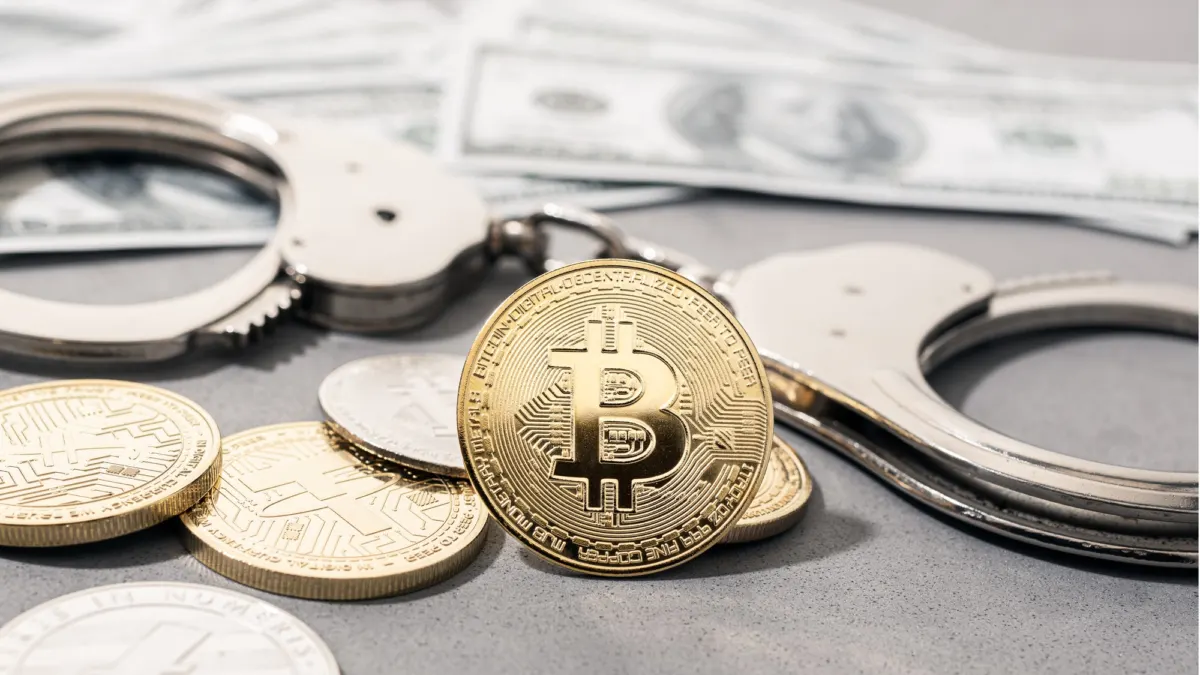
Crypto scams are schemes that trick you into sending cryptocurrency, or giving access to your wallet, to criminals. They work because crypto payments are fast, global and usually irreversible: once you send coins or sign the wrong transaction, there is no bank to call to reverse it.
The losses are large and growing. According to the FBI’s 2025 Internet Crime Report, Americans reported about $11.4 billion in cryptocurrency-related losses in 2025, up 22% from 2024, and crypto investment fraud was the single costliest type of crime the FBI’s complaint center tracked. Most of these scams do not hack anything. They persuade people to hand over money or keys voluntarily.
This guide explains how cryptocurrency scams work, walks through the most common types (including pig butchering, fake exchanges, giveaways, rug pulls, wallet drainers, romance, impersonation and recovery scams), gives you a red flags table, and lists exactly what to do and where to report if you have been scammed.
How Do Cryptocurrency Scams Work?
Almost every crypto scam follows the same basic playbook, even when the story changes:
- Contact. The scammer reaches you through a text, social media message, dating app, search ad, fake website or a “wrong number” message.
- Trust. They build credibility with friendliness, a romantic connection, a fake brand, a famous name or a professional-looking platform.
- Opportunity or urgency. They present a chance to make money (“guaranteed” returns, an insider tip) or a threat to avoid (“your account is compromised”).
- Payment in crypto. You are asked to buy crypto, often at a mainstream exchange or a crypto ATM, and send it to an address they control, or to connect your wallet to their site.
- Extraction. They keep asking for more, often through invented fees, taxes or penalties, until you stop paying. Then they disappear.
The key point: legitimate businesses and government agencies do not demand payment in cryptocurrency, and nobody legitimate needs your seed phrase. Once you understand the playbook, most scams become easier to recognize.
Types of Crypto Scams
Scammers mix and match these techniques, but most cases fall into a handful of recognizable types.
Pig butchering (relationship investment scams)
Pig butchering is a translation of a Chinese term (sha zhu pan) for a long con in which the scammer “fattens up” the victim with attention and fake profits before taking everything. The US Treasury’s Financial Crimes Enforcement Network (FinCEN) issued a public alert about it in 2023, and US agencies now often call it a relationship investment scam or crypto investment fraud.
It usually starts with an innocent-looking “wrong number” text or a social media or dating app contact. The scammer chats for days or weeks, then mentions how much they make trading crypto and offers to show you. They direct you to a polished trading website or app that they control. The FBI reports that many of these operations are run by organized criminal groups based in Southeast Asia, often using trafficked workers forced to send the messages.
Example: Here is how the numbers typically escalate in a pig butchering scam (hypothetical, but based on the pattern authorities describe).
- Week 2: You deposit $1,000. The fake platform soon shows a balance of $1,300, a 30% “gain.”
- Week 3: You are allowed to withdraw $200, which really arrives. This is bait to build trust.
- Weeks 4 to 8: Encouraged, you deposit $10,000 and then $25,000. The dashboard shows a balance of $52,000.
- Week 9: You try to withdraw. You are told you must first pay a 20% “tax” on the balance: 20% × $52,000 = $10,400.
Total sent: $1,000 + $10,000 + $25,000 + $10,400 = $46,400. Total received back: $200. Net loss: $46,400 − $200 = $46,200. The $52,000 balance never existed; it was just a number on a website the scammers controlled.
Fake exchanges and trading apps
Scammers build websites and apps that look like real exchanges or investment platforms, sometimes copying the name of a legitimate firm. Some even get into official app stores for a while. Your deposits go straight to the scammers, and the “account” just displays invented numbers. Before using any platform, check that it is registered with regulators in your country and reach it by typing the address yourself, not through a link someone sent you. Our guide to buying Bitcoin safely covers how to vet an exchange.
Giveaway scams
“Send 1 ETH and we will send 2 back.” Giveaway scams impersonate celebrities, company founders or crypto brands, often in hacked social media accounts, fake livestreams or AI-generated deepfake videos. No real giveaway requires you to send money first. Any crypto you send is simply kept.
Rug pulls
In a rug pull, the creators of a new token or project hype it, attract buyers, then pull out the money and vanish. In a “hard” rug pull, the token’s code is malicious, for example letting insiders mint unlimited tokens or blocking ordinary holders from selling (a “honeypot”). In a “soft” rug pull, the developers simply dump their large holdings and abandon the project. A well-known case was the SQUID token in 2021, which buyers found they could not sell before the price collapsed. New tokens and memecoins are the most common vehicle.
Phishing and wallet drainers
Phishing means fake messages or sites designed to steal your login details or seed phrase. In crypto, it often comes as an email “from your exchange,” a fake wallet support chat, a search ad for a wallet brand that leads to a lookalike site, or an airdrop claim page.
A wallet drainer is a malicious smart contract or script on a fake site. When you connect your wallet and sign what looks like a routine request, you actually grant it permission to move your tokens or NFTs. Related tricks include address poisoning, where scammers send tiny transactions from an address that looks like one you use, hoping you will later copy it from your history by mistake. Learn how signing works in our guide to crypto wallets.
Romance scams
Romance scams overlap heavily with pig butchering. A scammer builds an online relationship, often over months, and then needs money: a medical emergency, a travel cost, a customs fee, or an “investment” you can make together. Requests to move the conversation off the dating app, refusal to video chat, and any request for crypto are major warning signs.
Impersonation scams
Scammers pose as exchange support, wallet developers, tech support, banks or government agencies. A common version says your bank account or identity is compromised and you must move your money to a “safe account,” often by withdrawing cash and depositing it into a crypto ATM. The FBI reported $389 million in losses involving crypto ATMs and kiosks in 2025, up 58% from 2024. No government agency or bank will ever ask you to do this.
Recovery scams
After a loss, victims are targeted again by people claiming they can get the money back for an upfront fee: “recovery” firms, fake lawyers, fake blockchain investigators, even people impersonating the FBI or its complaint center. The FBI recorded 10,516 recovery scam complaints with about $1.4 billion in reported losses in 2025 (a figure that may include earlier losses that led victims to the recovery company). Real law enforcement does not charge fees to investigate or return funds.
Crypto Scam Red Flags
Use this table as a checklist. One red flag is a reason to stop; two or more should end the conversation.
| Red flag | What it looks like | Common in |
|---|---|---|
| Guaranteed or very high returns | “1% a day,” “can’t lose,” “double your money” | Pig butchering, fake platforms, Ponzi schemes |
| Payment only in crypto | Fees, taxes or fines that must be paid in crypto or via a crypto ATM | Impersonation, fake platforms, recovery scams |
| Asked for your seed phrase or private key | “Verify your wallet,” “sync your wallet,” “support needs your phrase” | Phishing, fake support |
| Unsolicited contact that turns to money | Wrong-number texts, new online friends, DMs from “mentors” | Pig butchering, romance scams |
| Pressure and secrecy | “Act now,” “don’t tell your bank,” “this is confidential” | Impersonation, romance, investment fraud |
| Withdrawal blocked by fees | Must pay a tax, deposit or “release” fee before withdrawing | Fake exchanges, pig butchering |
| Send crypto to receive more | “Send 0.1 BTC, get 0.2 BTC back” | Giveaway scams |
| Anonymous team, locked code, sudden hype | Token with no audit, unknown developers, influencer pumping | Rug pulls |
| Unexpected signature requests | A site asks to approve “unlimited” spending or a signature you do not understand | Wallet drainers |
| Upfront fee to recover losses | Firm or “agent” promises to trace and return stolen crypto | Recovery scams |
Unrealistic returns deserve special attention because the math gives them away. A promise of 1% a day compounded for a year would turn $1,000 into about $37,800, because 1.01 raised to the 365th power is about 37.8. No legitimate investment does that reliably.
How Big Is the Crypto Scam Problem?
The FBI’s Internet Crime Complaint Center (IC3) publishes annual figures based on complaints it receives. In its 2025 report (covering calendar year 2025 and published in 2026):
- 181,565 complaints involved cryptocurrency, with about $11.37 billion in reported losses, up 22% from 2024.
- Cryptocurrency investment fraud accounted for about $7.2 billion, the largest loss category in the report.
- People aged 60 and over filed 44,555 crypto-related complaints and reported about $4.4 billion in losses, more than any other age group.
- 18,589 people reported losing more than $100,000 each.
These numbers only count what people reported to the FBI, so true losses are likely higher. Figures in other countries are tracked by their own agencies.
How to Protect Yourself From Crypto Scams
- Never share your seed phrase or private keys, with anyone, for any reason.
- Treat unsolicited investment advice as a scam until proven otherwise, especially from someone you met online.
- Verify platforms independently. Check registration with your country’s regulators (in the US, for example, FINRA BrokerCheck for brokers and state regulators for money transmitters) and type web addresses yourself.
- Read every wallet signature. If you do not understand what a request does, reject it. Use a separate wallet with a small balance for trying new apps.
- Check addresses character by character and never copy them from your transaction history.
- Use strong account security: unique passwords and an authenticator app or security key, not SMS, for two-factor authentication.
- Talk to someone you trust before sending money. Scammers rely on secrecy, and a second opinion breaks the spell.
Store longer-term holdings in a wallet you control and understand; see crypto wallet vs exchange for how to split funds. Our guide to how people lose their crypto covers more account security mistakes.
Warning: If anyone tells you to move money to “protect” it, pay a fee or tax to withdraw your profits, or keep the conversation secret from your bank or family, stop. These are among the strongest signs of a scam in progress.
Crypto Scam: How to Report It and What to Do Next
If you think you have been scammed, act quickly. Recovery is not guaranteed and is often impossible, but fast action improves the odds, especially if funds are still moving through regulated exchanges that can freeze them.
- Stop sending money. Do not pay any “fee” or “tax” to release a withdrawal, and cut off contact with the scammer.
- Secure what is left. If your seed phrase was exposed or you signed a malicious approval, create a new wallet on a clean device and move remaining funds there. Revoke token approvals using a reputable approval-checking tool. Change passwords and two-factor settings on exchange accounts.
- Collect evidence. Save wallet addresses, transaction IDs (hashes), dates, amounts, website URLs, usernames, phone numbers and screenshots of messages.
- Contact the exchange you sent from. If you bought crypto on an exchange and sent it to the scammer, report it to that exchange’s support right away. If funds reached another regulated exchange, it may be able to freeze them after a law enforcement request.
- Report to the FBI’s IC3 at ic3.gov. Include transaction hashes and addresses. In the US, also report to the Federal Trade Commission at reportfraud.ftc.gov.
- File a local police report. Some exchanges, banks and insurers require one, and it creates an official record.
- Report investment fraud to market regulators where relevant, such as the SEC or the CFTC in the US. Outside the US, use your national police fraud unit or financial regulator.
- Expect recovery scammers. After you report, be very wary of anyone who contacts you offering to recover your funds for a fee, including people claiming to be from the FBI or a law firm.
Being scammed is not a sign of stupidity. These operations are run by professionals who use scripts, psychology and time. Reporting helps authorities trace networks and can protect the next victim.
Bottom Line
Most crypto scams are persuasion, not hacking: someone convinces you to send coins, pay a fake fee or sign a harmful transaction. Guaranteed returns, payment demands in crypto, requests for your seed phrase, pressure and secrecy are the clearest warning signs. Verify platforms yourself, read every signature, and talk to someone before sending money to anyone you met online. If it does happen, stop paying, secure what remains, and report quickly to the exchange, IC3, the FTC and your local police. Explore more safety guides in our crypto hub.
Sources
- FBI Internet Crime Complaint Center – 2025 Internet Crime Report
- FBI Internet Crime Complaint Center (IC3) – File a complaint
- Federal Trade Commission – ReportFraud.ftc.gov
- FinCEN – Alert on Prevalent Virtual Currency Investment Scam Commonly Known as “Pig Butchering” (2023)
- FBI IC3 – Fictitious Law Firms Targeting Cryptocurrency Scam Victims Offering to Recover Funds
- Investor.gov (SEC) – Crypto Assets
- CFTC – Customer Advisories and Articles
- ethereum.org – Ethereum security and scam prevention
Frequently asked questions
What are the most common types of crypto scams?
The most common are investment scams such as pig butchering, fake exchanges and trading apps, giveaway scams, rug pulls, phishing and wallet drainers, romance scams, impersonation scams and recovery scams. Many cases combine several of these techniques.
What is a pig butchering scam?
It is a long-running investment scam in which a stranger builds trust over weeks, often through a wrong-number text or dating app, then steers you to a fake crypto platform. The site shows fake profits to encourage bigger deposits, and withdrawals are blocked by invented taxes or fees.
How do I report a crypto scam?
In the US, report to the FBI's Internet Crime Complaint Center at ic3.gov and to the FTC at reportfraud.ftc.gov, and file a local police report. Also contact the exchange you sent funds from. Outside the US, report to your national police fraud unit and financial regulator.
Can I get my money back after a crypto scam?
Sometimes, but often not. Crypto transfers are hard to reverse, though funds that reach regulated exchanges can occasionally be frozen and returned through law enforcement. Report quickly, and be wary of anyone charging an upfront fee to recover your funds.
How can I tell if a crypto exchange is fake?
Check that it is registered with regulators in your country, search for independent reviews and warnings, and access it only by typing the official address. Be suspicious if someone you met online recommended it, if returns look unusually high, or if withdrawals require extra fees.
Are crypto recovery services legitimate?
Most services that contact you offering to recover stolen crypto for an upfront fee are scams. The FBI has warned about fake law firms and people impersonating its complaint center. Law enforcement agencies do not charge victims to investigate.
What should I do if I connected my wallet to a scam site?
Move any remaining funds to a new wallet with a fresh seed phrase if you entered your phrase, and revoke token approvals the site may have obtained. Then document the site address and transactions and report it.
Keep learning
Crypto Wallet vs Exchange: Where Should You Keep Your Coins?
On an exchange the company holds your keys and you hold a claim on it; in your own wallet you…
Hardware Wallet vs Software Wallet: Which One Do You Need?
A hardware wallet keeps your private keys on a dedicated device that signs offline; a software wallet keeps them in…
What Is a Seed Phrase? 12 vs 24 Words and How to Store It Safely
A seed phrase is 12 or 24 words that encode your crypto wallet's master secret. Anyone with the words can…