What Is a Memecoin? How They Work and Why They’re So Risky
A memecoin is a crypto token driven by internet jokes and hype rather than any product or cash flow. Most launch cheaply, trade on thin liquidity and collapse fast.
In this guide
- What Is a Memecoin? A Clear Definition
- A Short History: From Dogecoin to Launchpads
- Memecoin vs Altcoin: What’s the Difference?
- How Do Memecoins Work? From Launch to Exchange
- Why Low Liquidity Moves Prices So Much: A Worked Example
- Memecoin Rug Pulls, Snipers and Insiders
- Why Memecoins Are So Risky
- Memecoin Red Flags Checklist
- Are Memecoins Ever a Good Idea?
- Bottom Line
- Sources
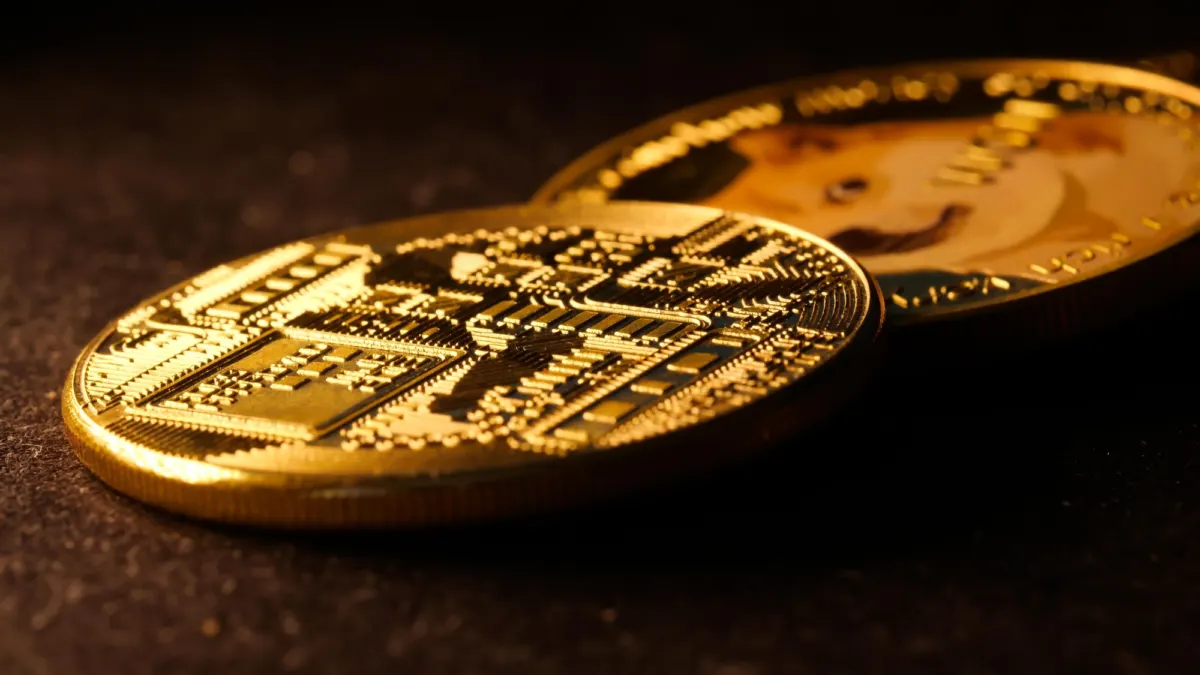
A memecoin is a cryptocurrency whose value comes almost entirely from internet culture, community hype and attention rather than from a product, revenue or a technical purpose. Most are named after a joke, an animal, a celebrity or a viral moment. So what is a memecoin in practice? It is a token you can buy and sell like any other crypto asset, but whose price depends on whether more people want it tomorrow than today.
Dogecoin, created in 2013 as a parody, was the first. Today anyone can launch a memecoin in minutes for a few dollars, and millions have been created. A handful have reached multi-billion-dollar valuations; the vast majority collapse to near zero within days.
This guide explains where memecoins came from, how they launch, how rug pulls and snipers work, why the math of thin liquidity makes them so risky, and the red flags to check before you ever consider one.
What Is a Memecoin? A Clear Definition
A memecoin is a crypto token built around a meme (a joke, image or idea that spreads online) with no claim on any business, cash flows or assets. Holding one gives you no share of profits, no vote on a company and no right to redeem it for anything. Its price is set purely by supply and demand on exchanges.
Most memecoins are not separate blockchains. They are tokens created on an existing chain, such as Ethereum, Solana or Base, using a standard template. Creating one can take a single transaction. A few older memecoins, like Dogecoin, do run their own blockchain.
In the US, the SEC’s Division of Corporation Finance said in a February 2025 staff statement that typical memecoins are not securities, because buyers are not investing in an enterprise and any profit depends on market sentiment rather than someone’s managerial work. The flip side, as the statement notes, is that memecoin buyers are not protected by federal securities laws. Fraud can still be prosecuted by other agencies, and rules differ in the UK, EU and elsewhere.
A Short History: From Dogecoin to Launchpads
- 2013, Dogecoin: software engineers Billy Markus and Jackson Palmer launched Dogecoin on December 6, 2013, as a lighthearted take on crypto, using the “Doge” Shiba Inu meme. It runs its own proof-of-work blockchain, produces a block about every minute and has no supply cap: roughly 5 billion new DOGE are created each year.
- 2021, the Dogecoin and Shiba Inu mania: celebrity attention, especially from Elon Musk, pushed Dogecoin’s value into the tens of billions. Shiba Inu (SHIB), an Ethereum token launched in 2020 with a supply of one quadrillion, rose by many thousands of percent.
- 2023, PEPE: a frog-themed token on Ethereum showed that a brand-new memecoin could reach a billion-dollar valuation within weeks.
- 2024 to 2025, the launchpad era: platforms such as pump.fun on Solana made creating a token as simple as filling in a name, ticker and image. Millions of tokens were launched. Political figures and celebrities released their own tokens, many of which fell sharply after launch.
The pattern repeats: a few memecoins become household names and survive for years, while the rest disappear. Survivors get the headlines, which makes the odds look better than they are.
Memecoin vs Altcoin: What’s the Difference?
An altcoin is any cryptocurrency other than Bitcoin. Memecoins are one category of altcoin, alongside smart contract platforms, stablecoins, DeFi tokens and others. Our guide to altcoins covers the other types.
| Feature | Typical memecoin | Typical utility altcoin |
|---|---|---|
| Purpose | Entertainment, community, speculation | Pays fees, secures a network or governs a protocol |
| Source of demand | Attention and social media momentum | Usage of the network or app, plus speculation |
| Cash flows or fee revenue | None | Sometimes, through fees, burns or staking |
| Team and roadmap | Often anonymous; often none | Usually a known team or foundation |
| Launch cost | A few dollars on a launchpad | Months or years of development |
| Typical lifespan | Hours to weeks for most | Varies; many also fail, but more slowly |
The line is not perfectly clean. Some memecoins add features later, and plenty of “utility” tokens trade mostly on hype. But the core question is the same: is there any reason to hold this token other than hoping someone pays more for it later?
How Do Memecoins Work? From Launch to Exchange
Most new memecoins follow a similar life cycle.
- Creation: someone mints a fixed supply of tokens, often 1 billion, using a token standard (SPL on Solana, ERC-20 on Ethereum).
- Initial trading: the creator either adds the tokens to a liquidity pool on a decentralized exchange (a pot of the token paired with SOL, ETH or a stablecoin that traders swap against) or uses a launchpad. Our explainer on liquidity pools covers how these pools set prices.
- Hype phase: the token is promoted on X, Telegram, Discord and livestreams. Early buyers push the price up.
- Graduation or listing: if enough people buy, the token moves to a larger exchange pool and may later be listed on centralized exchanges.
- Distribution: early holders sell to later buyers. For most tokens, the price then falls and trading activity fades.
How launchpads and bonding curves work
Launchpads like pump.fun sell new tokens along a bonding curve: a formula that sets the price automatically based on how many tokens have been sold. The first buyers pay the lowest price; each purchase moves the price up, and each sale moves it down. There is no order book and no market maker, just math.
Once a set amount has been bought, the token “graduates”: the launchpad moves the collected funds and remaining tokens into a regular decentralized exchange pool. Launchpads earn fees on trades. They made launching a token cheap and standardized, which removed some old tricks (for example, creators can no longer simply withdraw the starting liquidity on these platforms), but they also enabled an enormous volume of short-lived tokens.
The scale is striking. A May 2025 report by blockchain-surveillance firm Solidus Labs examined more than 7 million tokens launched on pump.fun between January 2024 and March 2025 and found that fewer than 100,000 kept more than $1,000 of liquidity. The firm classified about 98.6% as linked to pump-and-dump or rug pull behavior, a characterization pump.fun disputed.
Why Low Liquidity Moves Prices So Much: A Worked Example
Liquidity means how much money is available to trade against. When a pool is small, even modest trades move the price sharply, in both directions. Many decentralized exchanges use a constant product formula: the number of tokens multiplied by the amount of money in the pool must stay the same after every trade (ignoring fees).
Example: A hypothetical memecoin has a total supply of 1,000,000,000 tokens. Its pool holds 100,000,000 tokens and $10,000. The price is $10,000 / 100,000,000 = $0.0001, so data sites show a “market cap” of 1,000,000,000 x $0.0001 = $100,000.
Step 1, you buy $1,000. The pool’s constant is 100,000,000 x 10,000 = 1,000,000,000,000. After your $1,000 goes in, the pool holds $11,000, so it must hold 1,000,000,000,000 / 11,000 = 90,909,091 tokens. You receive about 100,000,000 – 90,909,091 = 9,090,909 tokens, an average price of $0.00011.
The new price is $11,000 / 90,909,091 = $0.000121, up 21%. The displayed market cap jumps to $121,000. A $1,000 purchase added $21,000 of “market cap”.
Step 2, an insider sells. Suppose the creator quietly holds 200,000,000 tokens (20% of supply) in other wallets and sells them all into the pool. The pool now holds 90,909,091 + 200,000,000 = 290,909,091 tokens, so it can keep only 1,000,000,000,000 / 290,909,091 = $3,437.50. The insider walks away with $11,000 – $3,437.50 = $7,562.50.
The price falls to $3,437.50 / 290,909,091 = about $0.0000118, a drop of about 90%. Your 9,090,909 tokens, which cost $1,000, are now marked at roughly $107, and you would receive slightly less if you sold, because your own sale would push the price down further.
Notice the insider’s tokens looked like they were “worth” 200,000,000 x $0.000121 = $24,200, but selling them produced only $7,562.50. Displayed value and sellable value are very different things in a thin market.
Real launchpad curves use different parameters and fees, but the lesson holds: in a small pool, the price you see is not a price you can get for any meaningful amount, and a single large holder can erase most of the value in one trade. Our guide to crypto market cap explains why that headline number can be so misleading.
Memecoin Rug Pulls, Snipers and Insiders
A rug pull is when the people behind a token take the money and leave holders with something nearly worthless. Common versions:
- Liquidity pull: the creator removes the money from the exchange pool, so there is nothing left for holders to sell into.
- Dev dump: the creator or team sells a large hidden allocation, as in the example above. A “slow rug” does this gradually over days or weeks.
- Mint or freeze tricks: if the creator kept the power to mint new tokens or freeze accounts, they can inflate the supply or block others from selling.
- Honeypot: the token’s code lets people buy but blocks or heavily taxes selling. This is more common on Ethereum-style chains with custom token code.
Snipers and bundled wallets
Snipers are automated bots that buy a new token in the very first block or seconds after launch, at the lowest point of the bonding curve, and sell into the first wave of human buyers. Bundling is when a creator buys a large share of supply at launch through dozens of separate wallets, so the holder list looks spread out when it is not.
Insiders, paid promoters and influencers who receive early allocations follow the same playbook: buy early and cheaply, promote, then sell into the demand they create. These are classic pump-and-dump dynamics. Ordinary buyers who arrive after seeing a post on social media are usually the exit liquidity. See our guide to common crypto scams for related schemes.
If you learned about a token from a stranger’s post, a paid influencer or a Telegram group urging you to “get in now”, assume the people promoting it bought earlier and are looking for buyers to sell to.
Why Memecoins Are So Risky
- No cash flows: a stock can be valued from a company’s earnings, and a bond from its interest payments. A memecoin produces nothing, so there is no floor based on fundamentals. Its value is whatever the next buyer pays.
- Supply concentration: a small number of wallets often hold a large share of the supply. When they sell, the price collapses.
- Thin liquidity: as the example shows, small pools mean large price swings and big gaps between displayed value and what you can actually sell for.
- Attention fades: memes are fashion. When the conversation moves on, buyers vanish.
- Information disadvantage: bots and insiders act in milliseconds with better data than you.
- Little legal recourse: creators are often anonymous and outside your country. As noted above, US securities laws generally do not protect memecoin buyers.
- Technical and scam risk: fake tokens with copied names, malicious “airdrops” and wallet-draining links target memecoin traders. Connecting your wallet to an unknown site can cost you everything in it.
Even established memecoins are extremely volatile. Dogecoin and Shiba Inu have both fallen more than 80% from their peaks at times. Treat any money put into memecoins as money you are prepared to lose completely.
Memecoin Red Flags Checklist
None of these checks makes a memecoin safe. They only help you spot the most obvious traps. Most can be checked with a blockchain explorer or token-analysis tools.
- Top holders own a big share. If the top 10 wallets (excluding the exchange pool) hold more than 20% to 30% of supply, a few sellers can crash the price.
- Many wallets funded from the same source or bought in the same block at launch, a sign of bundling.
- Mint or freeze authority not revoked (on Solana) or an unverified, owner-controlled contract (on Ethereum-style chains).
- Liquidity is tiny or not locked compared with the market cap shown. A $5 million “market cap” with $50,000 of liquidity is a warning sign.
- You cannot find a test sell or other people report that sells fail or carry huge taxes.
- Pressure to act fast: countdowns, “last chance” posts, guaranteed-gains talk.
- Copycat names: a token using the name of a famous brand, person or existing coin, but with a different contract address than the official one.
- Anonymous team with paid promotion and no history of other projects you can check.
- Price already up hundreds of percent in hours, meaning early holders are sitting on large gains they can take at your expense.
If you still want to experiment, use a separate “burner” wallet with only the amount you can lose, never share your seed phrase, and keep your main holdings in a different crypto wallet. Our crypto hub has more guides on safe self-custody.
Are Memecoins Ever a Good Idea?
Some people enjoy memecoins as a social game, a bit like a lottery ticket with a community attached, and a tiny number of early buyers have made large gains. But the structure is close to zero-sum before fees: every dollar of profit one trader takes comes from another trader’s loss, and platform fees, bots and insiders take a cut first.
If you are building wealth for retirement, a home or emergencies, memecoins do not belong in that money. Many people who want crypto exposure stick to larger, more established assets and keep speculative bets to a very small share of their portfolio, if any.
Bottom Line
A memecoin is a token whose only real driver is attention. Launchpads have made them trivially easy to create, and the economics of thin liquidity, concentrated supply, snipers and insiders mean most buyers lose money, often within hours. If you ever buy one, check the holder distribution and liquidity first, use a separate wallet, size the bet as money you can lose entirely, and be most skeptical when someone is urging you to hurry.
Sources
- U.S. Securities and Exchange Commission – Staff Statement on Meme Coins
- Investor.gov – Pump and Dump Schemes
- Investor.gov – Exercise Caution with Crypto Asset Securities: Investor Alert
- Investor.gov – Liquidity (or Marketability)
- Dogecoin – Official site
- Ethereum.org – ERC-20 Token Standard
- Federal Trade Commission – ReportFraud.ftc.gov
Frequently asked questions
How do memecoins work?
A creator mints a supply of tokens on a blockchain such as Solana or Ethereum and makes them tradable through a launchpad bonding curve or a decentralized exchange pool. The price moves purely with buying and selling pressure, driven by social media attention.
What is a memecoin rug pull?
A rug pull is when a token's creators or insiders take investors' money and leave the token nearly worthless, for example by removing pool liquidity or dumping a hidden allocation. Holders are left with tokens they cannot sell for much.
What is the difference between a memecoin and an altcoin?
Every memecoin is an altcoin, but not every altcoin is a memecoin. Utility altcoins usually pay network fees or govern a protocol, while memecoins exist mainly for community and speculation and have no cash flows.
Can memecoins make you rich?
A tiny number of early buyers have made large gains, but most memecoins lose almost all their value, often within days. Insiders and bots typically buy first, so later buyers face poor odds. Only risk money you can afford to lose entirely.
Is Dogecoin a memecoin?
Yes. Dogecoin was the original memecoin, launched in December 2013 as a parody. Unlike most newer memecoins, it runs its own proof-of-work blockchain and has been traded for more than a decade, but its price still depends heavily on sentiment.
How can you spot a memecoin scam?
Check whether a few wallets hold most of the supply, whether liquidity is tiny compared with the market cap, whether mint or freeze authority is still active, and whether the contract address matches the official one. Pressure to buy quickly is a major red flag.
Keep learning
What Is Solana? How It Works and How It Compares to Ethereum
Solana is a fast proof-of-stake blockchain that settles transactions for fractions of a cent. Its token, SOL, pays fees and…
What Are Altcoins? Types, Examples and Risks
Altcoins are all cryptocurrencies other than bitcoin, from platforms like Ethereum and Solana to stablecoins, exchange tokens and memecoins.
What Is XRP? How Ripple Works and What the Next 5 Years Could Bring
XRP in 5 years depends on real payment adoption, Ripple's stablecoin and custody growth, and competition from stablecoins and Swift,…