What Are Altcoins? Types, Examples and Risks
Altcoins are all cryptocurrencies other than bitcoin, from platforms like Ethereum and Solana to stablecoins, exchange tokens and memecoins.
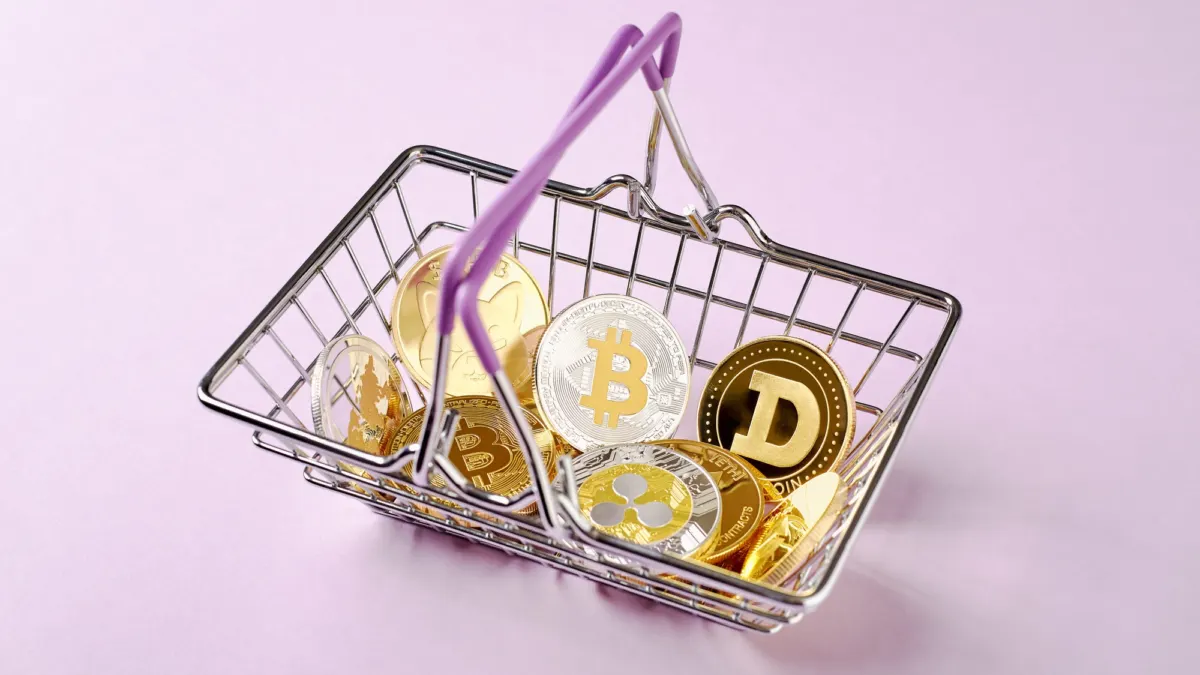
In this guide
What are altcoins? They are all cryptocurrencies other than bitcoin. The name is short for “alternative coins,” and it covers everything from large smart-contract platforms like Ethereum and Solana to stablecoins, exchange tokens and joke-inspired memecoins. If it is a crypto asset and it is not BTC, it is generally called an altcoin.
That makes “altcoin” a very broad label. It includes some of the most widely used networks in crypto and thousands of tokens that have no real use and little trading. Knowing what altcoins are, how they differ and how to judge one is the difference between understanding the crypto market and gambling on ticker symbols.
This guide explains where altcoins came from, the main categories with examples, a practical checklist for evaluating any altcoin, a worked example of market cap versus fully diluted valuation, and the risks that make altcoins more volatile than bitcoin. For background on the original cryptocurrency, see our complete guide to bitcoin.
What are altcoins? A simple definition
An altcoin is any cryptocurrency or crypto token that is not bitcoin. The term appeared in 2011, when the first projects copied bitcoin’s open-source code and changed some settings. Namecoin, launched in April 2011, tried to build a decentralized domain-name system. Litecoin, launched in October 2011, used a different mining algorithm and a faster block time of about 2.5 minutes versus bitcoin’s 10.
Today most altcoins are not bitcoin copies. Some run their own blockchains with different designs. Many more are tokens created on top of an existing blockchain using a standard template, such as Ethereum’s ERC-20 standard, which lets anyone launch a token in minutes. That ease of creation is why there are now tens of thousands of tracked altcoins, and far more untracked ones.
Coins vs tokens
People often use the words loosely, but there is a useful distinction:
- A coin is the native asset of its own blockchain and is used to pay network fees. Ether (ETH) on Ethereum and SOL on Solana are coins.
- A token lives on someone else’s blockchain and is managed by a smart contract, a program that runs on that chain. USDC, UNI and SHIB are tokens on Ethereum and other chains.
Both count as altcoins. The difference matters because a token depends on the security and fees of its host chain.
Main types of altcoins with examples
Altcoins fall into a handful of broad categories based on what they are designed to do. Some assets fit more than one.
| Category | What it does | Examples | Main risk |
|---|---|---|---|
| Smart-contract platforms | Blockchains that run applications; the coin pays fees and often secures the network through staking | Ethereum (ETH), Solana (SOL), Cardano (ADA), Avalanche (AVAX) | Competition between chains, outages, technical bugs |
| Payment coins | Designed mainly to transfer value quickly and cheaply | Litecoin (LTC), XRP, Stellar (XLM), Bitcoin Cash (BCH) | Competition from stablecoins and faster networks |
| Stablecoins | Track a fixed value, usually $1, backed by reserves or collateral | Tether (USDT), USD Coin (USDC), DAI/USDS | Reserve quality, depegs, issuer freezes |
| Exchange tokens | Issued by a crypto exchange; offer fee discounts or other platform perks | BNB (Binance), CRO (Crypto.com), OKB (OKX) | Tied to the fortunes and legal troubles of one company |
| DeFi tokens | Governance or fee-sharing tokens for decentralized finance apps | Uniswap (UNI), Aave (AAVE), Chainlink (LINK) | Smart contract hacks, weak value capture, regulation |
| Memecoins | Tokens driven by internet culture and community, usually with no utility | Dogecoin (DOGE), Shiba Inu (SHIB), Pepe (PEPE) | Extreme volatility, pump-and-dump schemes, rug pulls |
| Privacy coins | Hide sender, receiver or amount by default or as an option | Monero (XMR), Zcash (ZEC) | Exchange delistings and regulatory bans |
Smart-contract platforms
These are the largest altcoins by value. Ethereum pioneered general-purpose smart contracts in 2015, and most decentralized finance (DeFi), NFT and stablecoin activity still runs on Ethereum and its layer 2 networks. Rivals such as Solana trade off some decentralization for higher speed and lower fees. For the leader in this group, read our Ethereum guide.
Payment coins
Early altcoins like Litecoin and Bitcoin Cash aimed to be faster or cheaper bitcoin for everyday payments. XRP and Stellar target cross-border transfers between institutions. This category faces heavy competition from stablecoins, which offer fast payments without price swings.
Stablecoins vs altcoins
Stablecoins are technically altcoins, but they behave nothing like the rest. They aim to stay at $1 rather than rise in value, so people use them for trading, payments and parking funds, not speculation. Many data sites list them separately for that reason. Our guide to how stablecoins work covers the different designs.
Exchange tokens and DeFi tokens
Exchange tokens give holders trading-fee discounts or access to token sales on a single platform, so their value depends heavily on that company. DeFi tokens usually grant voting rights over a protocol and sometimes a share of its fees. A common weakness is that many DeFi tokens have governance rights but no direct claim on revenue.
Altcoins vs meme coins
All memecoins are altcoins, but most altcoins are not memecoins. Dogecoin began as a joke in 2013; Shiba Inu and Pepe followed the same model. Their prices move on social media attention and celebrity posts rather than usage, and new memecoins launch by the thousands every day on low-cost chains. Our memecoin guide explains why most of them go to zero.
Privacy coins
Monero hides transaction details by default, while Zcash makes privacy optional. Because they complicate anti-money-laundering checks, many exchanges have delisted them in some regions. In the EU, new anti-money-laundering rules will bar regulated crypto firms from handling anonymity-enhancing coins from July 2027.
How altcoins differ from bitcoin
Bitcoin has a fixed maximum supply of 21 million coins, no company or foundation behind it, and the longest track record in crypto. Most altcoins differ on at least one of those points.
- Supply rules: Many altcoins have large or uncapped supplies, ongoing inflation to pay stakers, or big allocations held by founders and investors.
- Who controls them: Many have an identifiable team, foundation or company that can change the code, hold treasury funds or influence governance.
- Consensus: Bitcoin uses proof of work (mining). Most newer platforms use proof of stake, where validators lock up coins to secure the network.
- Volatility: Altcoins have historically swung harder than bitcoin in both directions, and most have lost the bulk of their value in bear markets.
Traders also talk about “altcoin season,” a period when altcoins rise faster than bitcoin. It is usually measured by bitcoin dominance, which is bitcoin’s share of total crypto market capitalization. These periods have been short and hard to predict.
How to evaluate an altcoin: a practical checklist
Before you buy any altcoin, work through these questions. None guarantees a good outcome, but skipping them makes a bad one far more likely.
- Use case: What problem does it solve, and does anyone actually use it? Look for real activity such as fees paid, active addresses and apps built on it, not just a whitepaper.
- Why it needs a token: Ask what the token does. Paying network fees or securing the chain is a real role. “Governance” with no fee share is a weaker one.
- Token supply and release schedule: Find the circulating supply, maximum supply and the vesting schedule, which shows when tokens held by the team and early investors become sellable.
- Market cap vs FDV: Compare the market capitalization (price × circulating supply) with the fully diluted valuation (price × maximum supply). A big gap means much future supply is still to come.
- Distribution: Check how much supply sits in the largest wallets. If a few addresses hold most of it, they can move the price.
- Liquidity: Look at daily trading volume and order-book depth on reputable exchanges. Thin markets mean big price jumps when you buy or sell.
- Team and governance: Are the founders public, with a record you can check? Who controls upgrades and treasury funds?
- Security audits: Have independent firms audited the smart contracts, and were the problems found actually fixed? Has the project been hacked?
- Exchange and regulatory status: Is it listed on regulated exchanges in your country? Has a regulator taken action against it?
Our guide to crypto market cap explains how to read the numbers on price-tracking sites.
Market cap vs fully diluted valuation: a worked example
Market capitalization values only the tokens that are currently in circulation. Fully diluted valuation (FDV) values every token that will ever exist at today’s price. When most tokens are still locked in vesting contracts, the gap between the two tells you how much new supply may hit the market.
Example: Suppose a hypothetical token, XYZ, trades at $2.00. It has 150 million tokens circulating and a maximum supply of 1 billion.
- Market cap = $2.00 × 150,000,000 = $300 million.
- FDV = $2.00 × 1,000,000,000 = $2 billion.
- Only 15% of the eventual supply is circulating (150 million ÷ 1 billion).
Now suppose the vesting schedule releases 100 million tokens to early investors and the team over the next 12 months. Many of them paid around $0.20 per token, so selling at $2.00 would still be a tenfold gain.
- Circulating supply rises from 150 million to 250 million, an increase of 66.7%.
- If total demand stays the same and the market cap holds at $300 million, the price falls to $300,000,000 ÷ 250,000,000 = $1.20, a drop of 40%.
- To keep the price at $2.00, buyers must absorb the new tokens: the market cap would need to grow to 250,000,000 × $2.00 = $500 million, meaning $200 million of fresh demand.
The token can still rise if adoption grows fast enough. But a low circulating share and large near-term releases are a headwind that a quick look at the price chart will not show you.
Risks of investing in altcoins
Altcoins carry all the risks of bitcoin plus several of their own.
- Extreme volatility: Drops of 70% to 90% from a peak are common, even for large projects, and many altcoins from past cycles no longer trade at all.
- Project failure: A team can run out of money, lose developers or simply stop. Unlike a company in bankruptcy, token holders usually have no claim on any assets.
- Dilution: Ongoing token issuance and vesting releases can push prices down, as the example above shows.
- Low liquidity and manipulation: Small tokens are easy targets for pump-and-dump schemes and fake trading volume.
- Smart contract and bridge hacks: Bugs in code or in cross-chain bridges have led to losses of hundreds of millions of dollars in single incidents.
- Scams and rug pulls: In a rug pull, the creators withdraw liquidity or dump their holdings and vanish. Anonymous teams, sudden hype and liquidity the creators can withdraw at will are classic warning signs.
- Regulation: Regulators may treat some tokens as securities, restrict privacy coins or force exchanges to delist assets in certain regions. Rules differ by country and are still changing.
Treat small altcoins as high-risk speculation. Only put in money you can afford to lose entirely, and be wary of anyone promising guaranteed returns, “the next 100x” or pressure to buy before a deadline.
How to buy and store altcoins
Large altcoins are available on most major exchanges, and in some countries through regulated products such as exchange-traded funds; in the US, spot ETFs for some altcoins, including Solana and XRP, began trading in late 2025. Smaller tokens are often traded only on decentralized exchanges, which carry extra smart contract and liquidity risks.
If you buy on an exchange, decide whether to leave coins there or move them to a wallet you control. Check that your wallet supports the specific blockchain: a token on Solana and one with the same name on Ethereum are different assets. And keep records, because in most countries, including the US and UK, trading one altcoin for another is a taxable event.
Bottom line
Altcoins are every crypto asset other than bitcoin, from major platforms like Ethereum to stablecoins and short-lived memecoins. The label tells you very little on its own, so judge each one by its use case, token supply, liquidity, team and security record. Compare market cap with FDV to spot heavy future dilution, and size any position on the assumption that it could fall to zero. You can find more beginner guides in our crypto hub.
Sources
- Bitcoin.org – Bitcoin: A Peer-to-Peer Electronic Cash System
- Ethereum.org – What is Ethereum?
- Ethereum.org – ERC-20 Token Standard
- Investor.gov (SEC) – Crypto Assets
- Investor.gov (SEC) – Investor Alert: Crypto Asset Securities
- ESMA – Markets in Crypto-Assets Regulation (MiCA)
- Litecoin – Official site
Frequently asked questions
What are altcoins, with examples?
Altcoins are any cryptocurrencies other than bitcoin. Examples include Ether (ETH) and Solana (SOL) for smart contracts, XRP and Litecoin for payments, USDT and USDC as stablecoins, BNB as an exchange token, UNI as a DeFi token, and Dogecoin as a memecoin.
Is Ethereum an altcoin?
Yes. Ethereum's coin, ether, is technically an altcoin because it is not bitcoin, and it is the largest one by market value. Some people use "altcoin" only for smaller coins, but the standard definition includes Ethereum.
What is the difference between altcoins and meme coins?
Memecoins are a subset of altcoins built around jokes, internet culture or communities, usually with no real use. Other altcoins power blockchains, payments or applications. Memecoins tend to be even more volatile and are frequent targets of pump-and-dump schemes.
Are stablecoins altcoins?
Technically yes, since they are not bitcoin. But stablecoins vs altcoins behave very differently: stablecoins aim to stay at a fixed value, usually $1, while other altcoins float freely. Many data sites list stablecoins separately for that reason.
Are altcoins a good investment?
Some altcoins have grown into widely used networks, but most have failed or lost the bulk of their value. They carry higher volatility, dilution, hacking and regulatory risks than bitcoin. Treat small altcoins as speculation and only risk money you can afford to lose.
What is altcoin season?
Altcoin season is a period when altcoins as a group rise faster than bitcoin. It is usually measured by a falling bitcoin dominance, bitcoin's share of total crypto market value. These periods have been short-lived and hard to predict.
Keep learning
What Is XRP? How Ripple Works and What the Next 5 Years Could Bring
XRP in 5 years depends on real payment adoption, Ripple's stablecoin and custody growth, and competition from stablecoins and Swift,…
Crypto Price Predictions for 2032: How Forecasts Are Made and How Far to Trust Them
No XRP price prediction 2032 is reliable. Learn how long-range crypto forecasts are built, test them with market-cap math, and…
USDT vs USDC: Which Stablecoin Is Safer?
USDT is bigger and more liquid; USDC holds simpler reserves, reports monthly and is regulated in the EU and US.…