Can You Lose Your Bitcoin? 9 Ways People Lose Crypto and How to Avoid Them
Yes. Bitcoin transactions are final and nobody can reset your keys, so lost seed phrases, scams, hacks and mistakes usually mean permanent losses. Most are preventable.

In this guide
- Can I Lose My Bitcoin? Why Crypto Losses Are Usually Permanent
- The 9 Ways People Lose Bitcoin at a Glance
- Losing Access to Your Own Coins
- Being Tricked Into Giving Crypto Away
- Attackers Breaking In: Phones, Computers and Homes
- When Someone Else Holds Your Coins
- How to Keep Crypto Safe: A 10-Minute Security Audit
- Bottom Line
- Sources
Yes, you can lose your bitcoin, and once it is gone it is usually gone for good. Bitcoin has no bank, no help desk and no “forgot password” button: whoever controls the private keys controls the coins, and confirmed transactions cannot be reversed. So when people ask “can I lose my bitcoin?”, the honest answer is that the network itself is very hard to break, but the people and tools around it fail all the time.
Almost every loss falls into a handful of patterns. People lose access (a forgotten seed phrase, a dead hard drive), get tricked (phishing, scams, SIM swaps), make irreversible mistakes (wrong address or network), or trust the wrong custodian (an exchange that collapses). Each pattern has a simple defense.
Below are the nine most common ways people lose crypto, each with a prevention checklist, plus a quick self-audit. The same rules apply to Ethereum and most other coins.
Can I Lose My Bitcoin? Why Crypto Losses Are Usually Permanent
A bitcoin private key is a secret number that authorizes spending from an address. Most wallets generate all your keys from a single seed phrase (also called a recovery phrase): 12 or 24 ordinary words that act as a master backup. If you hold the seed phrase, you hold the money. If someone else gets it, they hold the money too.
Three properties of the network make losses stick:
- Transactions are final. Once a transaction is confirmed in a block, there is no chargeback, dispute process or central party that can undo it.
- No identity layer. Addresses are not tied to names, so you cannot “call the owner” of an address you sent coins to by mistake.
- No password reset. In a self-custody wallet, nobody else has a copy of your keys. That is the point, and also the risk.
The scale is real. In a June 2020 analysis, blockchain analytics firm Chainalysis estimated that about 20% of the roughly 18.6 million bitcoin mined at the time, around 3.7 million BTC, had not moved in five years or more and was likely lost. That is an inference from inactivity, not a count of confirmed lost keys, so treat it as a rough estimate. Theft and fraud add to the toll: the FBI’s Internet Crime Complaint Center (IC3) recorded about $9.3 billion in reported losses from crypto-related complaints in its 2024 report.
The 9 Ways People Lose Bitcoin at a Glance
Before the details, here is the overview. The “who can help” column matters: for most of these, the answer is nobody.
| # | How the loss happens | Typical trigger | Can anyone reverse it? |
|---|---|---|---|
| 1 | Lost keys or seed phrase | Lost paper backup, dead device, forgotten passphrase | No |
| 2 | No inheritance plan | Holder dies or is incapacitated | Only if heirs can find the keys |
| 3 | Wrong address or network | Typo, unsupported chain, missing memo tag | Rarely, only if a custodian holds the receiving address |
| 4 | Phishing | Fake wallet site, fake support, fake app | No |
| 5 | Scams | Fake investment platforms, romance and impersonation schemes | Very rarely |
| 6 | SIM swap | Attacker takes over your phone number | No, once coins leave the account |
| 7 | Malware and clipboard hijacking | Infected computer, fake browser extension | No |
| 8 | Physical theft or coercion | Stolen backup, burglary, threats | No |
| 9 | Exchange or custodian failure | Bankruptcy, hack, frozen withdrawals | Partially, through slow legal processes |
Losing Access to Your Own Coins
These losses involve no criminal at all. The coins still exist on the blockchain, but nobody can move them, or they went somewhere you cannot reach.
1. Losing Your Private Keys or Seed Phrase
This is the classic way to lose bitcoin, and it is the main driver of the “lost coins” estimates above. Early miners threw away hard drives; today it is usually a broken phone and a seed phrase that was never written down.
A subtler version involves the optional passphrase, sometimes called the “25th word”. It adds an extra secret on top of the seed phrase and creates a completely different wallet. Forget the passphrase and the seed phrase alone opens an empty wallet. Our guide to seed phrases and how to store them covers backup formats in detail.
Prevention checklist:
- Write your seed phrase on paper or stamp it into metal the moment you create a wallet. Never store it as a photo, screenshot, cloud note or email draft.
- Keep at least two copies in separate secure places (for example, a home safe and a bank safe deposit box).
- Test the backup: wipe or reset the wallet with a small balance and restore it from your written words before you deposit larger sums.
- If you use a passphrase, back it up separately from the seed phrase and make sure the backup survives you.
2. Dying Without an Inheritance Plan
Self-custody means that when you are gone, the keys may go with you. Heirs often do not know which wallets exist, where the seed phrase is, or how to use it. In other cases, they find the phrase but not the passphrase, or they cannot tell a legitimate recovery service from a scam.
A good plan lets your family access the coins later without letting anyone take them early. A will alone is not a safe place for a seed phrase, because wills can become public records during probate.
Prevention checklist:
- Write a letter of instruction that lists your wallets, exchanges, and where backups are kept, without including the seed phrase itself.
- Store the seed phrase somewhere your executor can legally access, such as a safe deposit box or a sealed envelope with your attorney.
- Consider a multisignature (multisig) setup, where for example 2 of 3 keys are needed to spend, with one key held by a trusted person or professional.
- For exchange accounts, tell your executor which platforms you use; most have a process for estates.
- Talk to an estate attorney familiar with digital assets about the rules where you live.
3. Sending to the Wrong Address or Network
A crypto address is a long string of characters, and the network will happily accept a valid address you did not intend. Copy the wrong one, or have it swapped by malware (see way 7 below), and the coins arrive somewhere you cannot reach. There is no undo.
The network mismatch is just as common. Many tokens exist on several blockchains, so the same asset (USDT, for example) can be sent over Ethereum, Tron or a layer 2 network. If you withdraw on one network to a wallet or exchange address that only supports another, the funds may be stranded. Some exchanges also require a memo or destination tag for coins like XRP; leave it out and your deposit may not be credited automatically.
Prevention checklist:
- Always copy and paste addresses, then check the first and last six characters against the source, and a few in the middle.
- Confirm the network on both sides: the sending platform’s withdrawal network must match the receiving wallet’s deposit network.
- Send a small test transaction first for any new address or large amount.
- Include any required memo or tag exactly as shown by the receiving exchange.
Example: Suppose you want to move $10,000 of bitcoin to a new hardware wallet. You first send a test of $50. The network fee for the test is about $2, so the test costs you roughly $2 extra in total.
Now compare that with the downside. If a typo or swapped address sent the full $10,000 to the wrong place, you would lose 100% of it. Paying $2 to protect $10,000 is insurance costing 0.02% of the amount, and it catches the exact mistakes that cannot be reversed.
Being Tricked Into Giving Crypto Away
Here the attacker does not break anything. They persuade you to hand over a secret or send the funds yourself.
4. Phishing: Fake Sites, Fake Apps and Fake Support
Phishing means tricking you into handing over secrets by impersonating someone you trust. In crypto, the target is almost always your seed phrase or a signature that approves a malicious transaction. Common versions include search ads that lead to a copycat wallet website, fake wallet apps in app stores, emails claiming your hardware wallet needs a “security update”, and “support agents” who message you on social media after you post about a problem.
The giveaway is always the same: someone asks you to type your seed phrase into a website, app or form. Real wallet makers and exchanges never need it. On Ethereum and similar networks, phishing sites also ask you to “connect wallet” and sign a token approval that lets them drain your tokens later.
Prevention checklist:
- Never type your seed phrase anywhere except the wallet device or app you are restoring, and only when you started the restore yourself.
- Bookmark official exchange and wallet sites; do not click search ads or links in emails and DMs.
- Treat any unsolicited “support” contact as a scam. Real support does not DM you first.
- Read what you are signing. If a site asks for unlimited token approval or a signature you do not understand, reject it.
5. Crypto Scams
Scams are the largest category of reported crypto losses. The FBI’s IC3 attributed about $5.8 billion of reported 2024 losses to crypto investment fraud alone. The common pattern is that you willingly send crypto to someone who has gained your trust. Typical versions include fake trading platforms showing fake profits (often after an online romance or “wrong number” text), impersonators of celebrities or officials, “double your coins” giveaways, and fake recovery services.
We cover the warning signs in depth in our guide to common crypto scams and how to spot them.
Prevention checklist:
- Treat any promise of guaranteed or unusually high returns as a red flag.
- Never move funds to a platform that someone you met online recommended, no matter how long you have known them.
- Government agencies, banks and real businesses do not ask you to pay in crypto or move money to “protect” it.
- If a platform demands a fee or “tax” before you can withdraw, stop; the money is almost certainly gone already.
- Report fraud to the FBI at ic3.gov or the FTC at reportfraud.ftc.gov in the US (or your national fraud agency), and ignore anyone who offers to recover funds for an upfront fee.
The one rule that stops most losses: nobody legitimate will ever ask for your seed phrase. Not your wallet maker, not an exchange, not a support agent, not a recovery service. If anyone asks, it is a theft attempt.
Attackers Breaking In: Phones, Computers and Homes
These attacks target the accounts, devices and places where your access lives.
6. SIM Swap Attacks
In a SIM swap, a criminal convinces or bribes your mobile carrier to move your phone number to a SIM card they control. From then on, your text messages and calls go to them, including the one-time codes many exchanges and email providers send by SMS. With your email and exchange account reset, they withdraw your crypto. Your phone simply loses signal, often at night.
The FBI warned in 2022 that SIM swapping complaints had jumped to 1,611 in 2021, with more than $68 million in reported losses, up from 320 complaints over the previous three years combined. Crypto holders who talk publicly about their holdings are a favorite target.
Prevention checklist:
- Replace SMS codes with an authenticator app or, better, a physical security key on your exchange and email accounts.
- Remove your phone number as a recovery option wherever the service allows it.
- Ask your carrier for a port-out PIN or SIM lock, and use a strong account password with them.
- Enable withdrawal address allowlisting on exchanges, so funds can only go to addresses you approved in advance.
- Do not post about your crypto holdings, and if your phone suddenly loses service, contact your carrier immediately from another phone.
7. Malware, Fake Extensions and Clipboard Hijacking
Malware attacks the device you use to manage crypto. Some strains search your files for anything that looks like a seed phrase, including screenshots and text documents. Others are fake browser extensions or “wallet” apps that send your keys to the attacker.
The sneakiest is clipboard hijacking: when you copy a crypto address, malware silently swaps in the attacker’s address. A related trick called address poisoning sends you a tiny transaction from an address that looks like one you use, hoping you copy it from your history later.
Prevention checklist:
- Use a hardware wallet for meaningful sums: it keeps keys off your computer and shows the destination address on its own screen for you to confirm.
- Verify the full address on the hardware wallet screen before approving, not only in the app.
- Never copy addresses from your transaction history; use your saved address book or the recipient’s original request.
- Keep your system updated and install only the browser extensions you need.
8. Physical Theft and Coercion
A seed phrase on paper is only as safe as the place it sits: burglars and house guests can find a backup left in a desk drawer. At the extreme end are rare “wrench attacks”, where criminals threaten people in person to force a transfer, usually targeting people known to hold large amounts.
Prevention checklist:
- Store backups in a locked safe or safe deposit box, not in obvious places, and avoid labeling them “bitcoin seed”.
- Keep your holdings private, both online and in conversation.
- For larger sums, consider splitting control with a multisig setup across different locations, so no single stolen backup is enough.
- Some wallets let you add a passphrase so a found seed phrase opens only a small decoy wallet; only use this if you can reliably back up the passphrase.
When Someone Else Holds Your Coins
The last risk comes from trusting a third party with custody.
9. Exchange or Custodian Failure
When you leave coins on an exchange, you do not hold the keys; the exchange does. You hold an IOU, a promise that it will send your crypto when you ask. If the exchange is hacked, mismanaged or simply runs out of money, that promise can break. Mt. Gox, once the largest bitcoin exchange, collapsed in 2014 after losing hundreds of thousands of bitcoin, and FTX filed for bankruptcy in November 2022 with customer funds missing. Customers in both cases waited years for partial recoveries through court processes.
Custody is a trade-off: a regulated exchange can be safer for a beginner than a self-custody wallet with no backup, but the larger and longer-term your holding, the stronger the case for your own keys. Our comparison of a crypto wallet vs an exchange goes through the decision step by step.
Prevention checklist:
- Use exchanges that are licensed or registered in your country and publish proof-of-reserves or audited financial statements.
- Keep only what you are actively trading on an exchange; move long-term holdings to your own wallet.
- Avoid platforms that promise high fixed yields on deposits, a common feature of the lenders that failed in 2022.
- Remember that crypto at an exchange is generally not covered by deposit insurance such as US FDIC protection.
How to Keep Crypto Safe: A 10-Minute Security Audit
If you only do a few things after reading this, do these. They cover most of the crypto security tips above in one pass:
- Locate your seed phrase backups and confirm they are readable.
- Check your exchange logins: switch from SMS codes to an authenticator app or security key, and turn on withdrawal allowlisting.
- Secure your email, since it is the reset path for everything else. Use a unique password and strong two-factor authentication.
- Decide what stays on exchanges. Move long-term holdings you are comfortable managing into a self-custody crypto wallet.
- Review token approvals on Ethereum wallets and revoke ones you no longer use.
- Write a one-page letter of instruction for your family.
For a broader overview of where each type of wallet fits, see our crypto guides hub.
Bottom Line
You can lose your bitcoin, but rarely because the technology fails. Losses come from lost backups, stolen secrets, irreversible mistakes and misplaced trust. Write down and test your seed phrase, never share it, use a hardware wallet for meaningful amounts, replace SMS codes with stronger two-factor authentication, send test transactions, and leave clear instructions for your heirs. Those habits take an afternoon to set up and remove most of the risk.
Sources
- Chainalysis – 60% of Bitcoin Is Held Long Term as Digital Gold. What About the Rest?
- FBI Internet Crime Complaint Center – 2024 Internet Crime Report
- FBI IC3 – Criminals Increasing SIM Swap Schemes to Steal Millions of Dollars
- Bitcoin.org – Secure Your Wallet
- SEC Investor.gov – Crypto Assets
- CISA – Turn On Multifactor Authentication
- Federal Trade Commission – ReportFraud.ftc.gov
Frequently asked questions
Can I lose my bitcoin if I lose my hardware wallet?
Not if you still have your seed phrase. The coins live on the blockchain, so you can restore the wallet on a new device with your 12 or 24 words. Without the seed phrase (and passphrase, if you set one), the coins are usually unrecoverable.
Can lost bitcoin be recovered?
Only if you can recover the keys, for example by finding a seed phrase backup or an old wallet file. Coins sent to a wrong address or stolen by scammers generally cannot be pulled back, although exchanges can sometimes freeze stolen funds that reach them. Be very wary of paid "recovery services", which are often scams themselves.
How much bitcoin is lost forever?
Nobody knows exactly. A 2020 Chainalysis analysis estimated about 3.7 million BTC, roughly 20% of the coins mined at the time, had not moved in five years or more and was likely lost. Some of those coins may belong to long-term holders who simply have not moved them.
Is it safer to keep crypto on an exchange or in my own wallet?
It depends on your skills and the amount. An exchange protects you from losing a seed phrase but exposes you to hacks, freezes and bankruptcy. A self-custody wallet removes exchange risk but makes you fully responsible for backups and security.
What are the best crypto security tips for beginners?
Write your seed phrase on paper and never share it, use an authenticator app or security key instead of SMS codes, buy hardware wallets only from the maker, double-check addresses and networks, and send a small test transaction before large transfers.
Can someone steal my bitcoin with just my wallet address?
No. An address only lets people send you coins and view your balance. To spend, they need your private key or seed phrase, or they need to trick you into approving a transaction.
What should I do if my crypto was stolen?
Move any remaining funds to a new, clean wallet with a new seed phrase, change passwords on email and exchange accounts, and contact any exchange involved. In the US, report the theft to the FBI at ic3.gov and the FTC at reportfraud.ftc.gov, and keep transaction IDs as evidence.
Keep learning
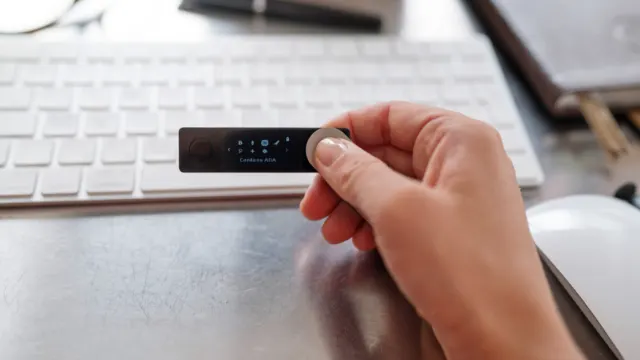
Hot Wallet vs Cold Wallet: Differences, Pros and Cons
A hot wallet keeps your crypto keys on an online device for easy spending; a cold wallet keeps them offline,…
What Is a Crypto Wallet and How Does It Work?
A crypto wallet stores the private keys that control your crypto on the blockchain, letting you send, receive and check…

Bitcoin vs Ethereum: Key Differences Explained
Bitcoin is fixed-supply digital money secured by mining; Ethereum is a programmable proof-of-stake blockchain whose coin, ETH, pays for running…