
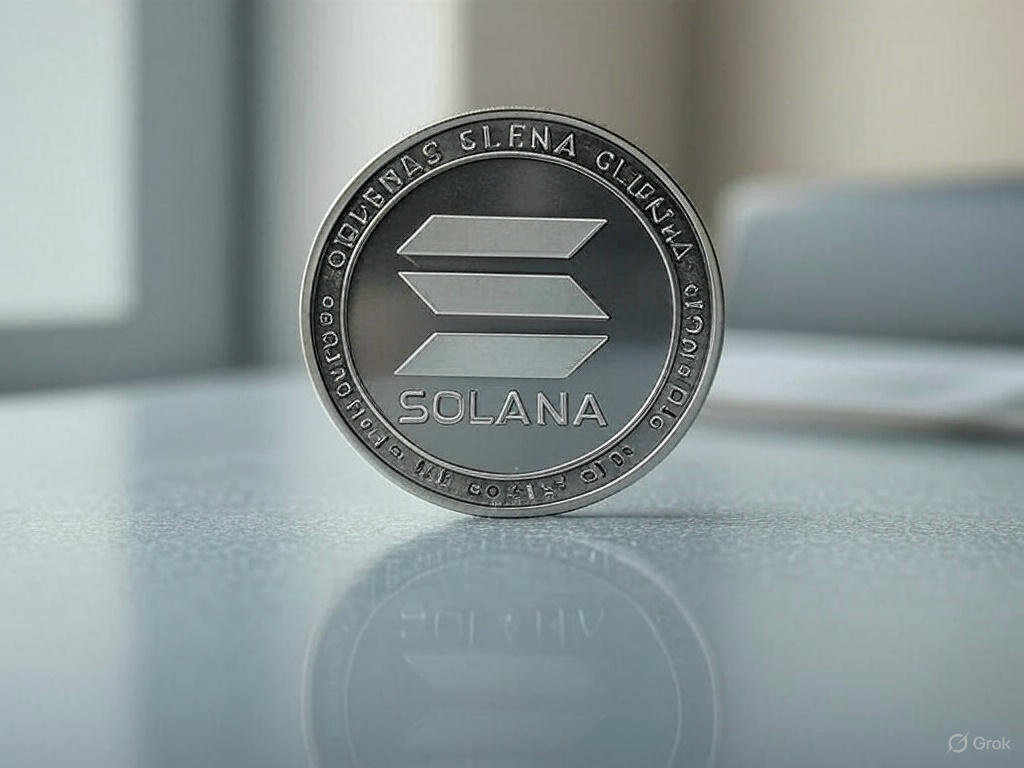
Wall Street is witnessing a notable transformation as Solana Exchange-Traded Funds (ETFs) gain widespread traction among institutional investors. This marks a new era where traditional financial players are embracing blockchain-based assets, redefining how cryptocurrency exposure fits into mainstream investment strategies.
Over the past year, Solana (SOL) has emerged as one of the most dynamic blockchain ecosystems, praised for its high transaction speeds, low costs, and scalable infrastructure. These strengths have made it a preferred choice for decentralized applications (dApps), NFTs, and DeFi projects, fueling institutional demand for structured financial products tied to the Solana network.
Institutional Adoption Reshapes the Market
The introduction of Solana ETFs has provided a pivotal bridge between traditional finance and digital assets. These funds allow investors to gain exposure to Solana’s ecosystem without the need to hold tokens directly — minimizing risks such as custodial security, private key management, and liquidity challenges.
Financial giants including BlackRock and Vanguard have reportedly either launched or explored Solana-based ETFs, reflecting growing confidence in the long-term viability of blockchain technology. Their participation underscores a broader institutional shift toward crypto integration, as hedge funds, pension funds, and mutual funds diversify their portfolios with digital asset exposure.
Market Implications and Investor Response
The growing adoption of Solana ETFs could significantly enhance liquidity and price stability within the SOL market. Analysts note that institutional inflows not only legitimize the asset class but also drive innovation in blockchain-linked financial instruments. This could encourage the creation of similar ETFs for emerging blockchain platforms, deepening crypto’s footprint in global markets.
Moreover, the rise of Solana ETFs signals a shift in investor behavior — from speculative trading to strategic, long-term positioning. Traditional investors who once avoided direct cryptocurrency exposure are now participating indirectly through these regulated investment vehicles.
Regulatory Landscape and Risks
Despite the optimism, analysts caution that volatility and regulatory uncertainty remain key risks. Global regulators continue to refine their stances on digital assets, and any major policy shift could influence ETF approvals and market performance. In the U.S., for instance, the SEC’s evolving framework for crypto-based financial products will likely determine the future trajectory of Solana ETFs.
Still, the momentum is hard to ignore. As one market strategist at Morgan Stanley put it, “The approval and adoption of Solana ETFs mark a critical inflection point — one that brings digital assets firmly into the institutional mainstream.”
What is the main advantage of Solana ETFs for investors?
They provide diversified exposure to Solana’s ecosystem without the need to directly hold the tokens, reducing security risks and simplifying investment management.
How might Solana ETFs impact the broader cryptocurrency market?
They could boost liquidity and attract institutional investors, potentially leading to increased mainstream acceptance and further development of blockchain-based assets.
What are the main risks associated with investing in Solana ETFs?
The primary risks include market volatility of cryptocurrencies, regulatory uncertainty, and technological risks related to the Solana blockchain platform itself.