Inflation Explained: How It Affects Your Savings and What to Do
Inflation is the general rise in prices that shrinks what your money buys. Central banks raise interest rates to slow it, and savers protect themselves by earning returns above it.
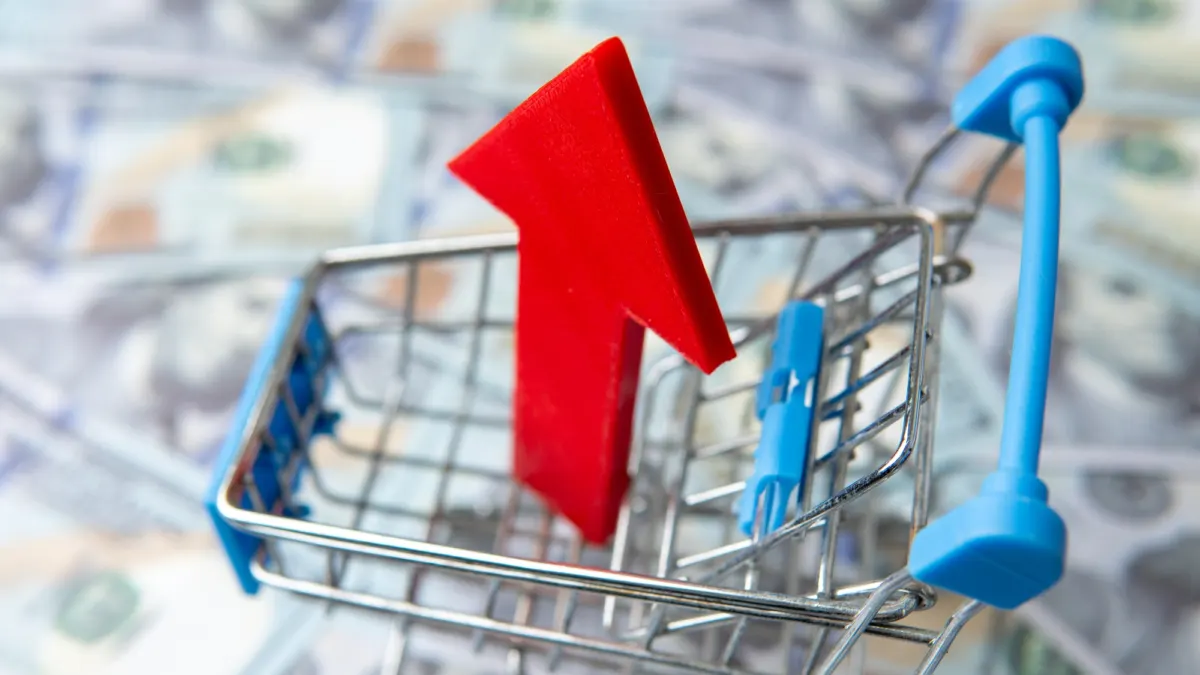
In this guide
- What Is Inflation? Inflation vs Purchasing Power
- How Inflation Is Measured: CPI and the BLS
- What Causes Inflation?
- How Inflation Erodes Savings and Wages
- Real vs Nominal Returns
- Inflation vs Interest Rates: How Central Banks Respond
- How to Protect Your Money From Inflation
- Hyperinflation: When Inflation Spirals Out of Control
- Bottom Line
- Sources
Inflation is the general rise in prices across an economy, which means each dollar, pound or euro buys a little less over time. The link between inflation vs interest rates is the key to what happens next: when inflation runs too hot, central banks raise interest rates to cool spending, and those rates flow through to your savings account, mortgage and investments.
Inflation is back in the headlines. According to the US Bureau of Labor Statistics (BLS), the Consumer Price Index for All Urban Consumers (CPI-U) rose 3.7% in the 12 months to September 2026, in figures released on October 14, 2026, with energy prices the biggest driver of that month’s jump. That is well above the 2% rate most central banks aim for.
This guide explains how inflation is measured, what causes it, how it eats into savings and wages, how central banks respond, and practical steps to protect your money, from inflation-linked bonds to avoiding cash drag.
What Is Inflation? Inflation vs Purchasing Power
Inflation is the rate at which the average price level rises, usually measured over 12 months. Purchasing power is what your money can actually buy. The two move in opposite directions: when inflation is positive, purchasing power falls.
Inflation does not mean every price rises equally. In any given year, some things (such as electronics) may get cheaper while others (such as rent or insurance) climb much faster. The headline figure is an average weighted by how much households typically spend on each category.
The opposite, a sustained fall in prices, is deflation. It sounds attractive but tends to accompany weak economies, because people delay purchases and debts become harder to repay. That is one reason central banks aim for low, positive inflation rather than zero.
Example: Suppose a basket of groceries costs $100 today and prices rise 3.7% over the next year. The same basket would cost $100 × 1.037 = $103.70. Put the other way, $100 next year buys only what $100 ÷ 1.037 ≈ $96.43 buys today.
How Inflation Is Measured: CPI and the BLS
In the US, the best-known measure is the Consumer Price Index (CPI), published monthly by the BLS. Here is how it works:
- Price collection. BLS staff record the prices of about 80,000 items each month from stores, service providers, rental housing units and doctors’ offices across US urban areas.
- Weights. Each category is weighted by how much households spend on it, based on the Consumer Expenditure Survey. Housing is the largest single component.
- Eight major groups. Food and beverages, housing, apparel, transportation, medical care, recreation, education and communication, and other goods and services, broken into more than 200 categories.
- Coverage. The CPI-U, the headline index, represents the spending of urban households, which make up over 90% of the US population.
You will also see core CPI, which excludes food and energy because their prices swing sharply from month to month. In September 2026 core CPI was up 2.6% over 12 months, well below the 3.7% headline figure, a sign that the jump was concentrated in energy. The Federal Reserve prefers a different gauge, the Personal Consumption Expenditures (PCE) price index, which covers a broader range of spending and usually runs a little below CPI.
Other countries use their own measures: the UK’s Office for National Statistics publishes CPI and CPIH, and the euro area uses the Harmonised Index of Consumer Prices (HICP). Your own inflation rate may differ from any official figure depending on what you buy, where you live and whether you rent or own.
What Causes Inflation?
Economists group the causes into a few broad categories. In practice, several usually act at once.
Demand-pull inflation
When households, businesses and governments try to buy more than the economy can produce, sellers raise prices. Low interest rates, strong job markets, tax cuts and government stimulus can all boost demand.
Cost-push inflation
When the cost of producing goods rises, businesses pass some of it on. Energy is the classic example: the oil shocks of the 1970s pushed US CPI inflation to a peak of 14.8% in March 1980. Supply-chain disruptions, droughts that hit harvests, and tariffs on imported goods can work the same way.
Money supply
If the amount of money in circulation grows much faster than the output of goods and services, more money ends up chasing the same goods. Economists debate how tight this link is in modern economies, but extreme money printing to cover government spending is behind every major hyperinflation.
Expectations and wages
If workers expect prices to keep rising, they ask for bigger raises, and businesses raise prices to cover the higher wages. This feedback loop, sometimes called a wage-price spiral, is why central banks watch inflation expectations closely.
The 2021 to 2022 surge combined all of these: pandemic supply bottlenecks, an energy price shock and strong demand fueled by stimulus and savings. US CPI inflation peaked at 9.1% for the 12 months to June 2022, the highest in about 40 years.
How Inflation Erodes Savings and Wages
Inflation works quietly. Your bank balance never shrinks, but what it buys does.
Example: Suppose you hold $10,000 in a checking account paying no interest, and inflation averages 3% a year for 10 years.
- Purchasing power after 10 years: $10,000 ÷ 1.03^10 ≈ $10,000 ÷ 1.344 ≈ $7,441 in today’s money.
- You have lost about 26% of your purchasing power without spending a cent.
- If the account paid 0.5% interest instead, the balance would grow to about $10,511, still worth only about $7,821 in today’s dollars.
A handy shortcut is the Rule of 72: divide 72 by the inflation rate to estimate how many years it takes prices to double. At 3% inflation, prices double in about 24 years; at 3.7%, in about 19.5 years.
Inflation vs wages
What matters for your income is your real wage: pay growth after inflation. A 3% raise sounds good, but in a year with 3.7% inflation it is a real pay cut of about 0.7%, calculated as 1.03 ÷ 1.037 − 1. Over long periods wages have generally kept up with or outpaced inflation, but there are often stretches of several years when they fall behind, as many workers experienced in 2021 and 2022. Before treating a raise as a gain, compare it with the latest CPI figure.
Real vs Nominal Returns
The nominal return is the percentage your money grows on paper. The real return is what is left after inflation, and it is the number that tells you whether your purchasing power is actually growing.
Example: Suppose your savings account pays 5% a year and inflation is 3%.
- Quick approximation: 5% − 3% = 2% real return.
- Exact calculation: (1.05 ÷ 1.03) − 1 = 1.94%.
- After tax: if that interest is taxed at a 22% rate, you keep 5% × (1 − 0.22) = 3.9%. Your real after-tax return is (1.039 ÷ 1.03) − 1 ≈ 0.87%.
- Now suppose the account pays 0.5% while inflation is 3.7%: (1.005 ÷ 1.037) − 1 ≈ −3.1%. You are losing ground every year.
History shows how much real returns differ across assets. According to Aswath Damodaran’s data at NYU Stern, from 1928 to 2025 US stocks returned about 10.0% a year nominally and about 6.8% after inflation. Ten-year Treasury bonds returned about 4.5% nominally but only about 1.5% real, and 3-month Treasury bills just 0.3% real. Inflation averaged roughly 3% a year over that period.
Inflation vs Interest Rates: How Central Banks Respond
Central banks are the main line of defense against inflation. In the US, the Federal Reserve has a dual mandate from Congress: maximum employment and stable prices. Since January 2012 it has defined price stability as inflation of 2% a year over the longer run, measured by the PCE price index. The Bank of England and the European Central Bank also target 2%.
The main tool is the short-term policy rate (in the US, the target range for the federal funds rate). Here is how a rate hike works its way through the economy:
- The central bank raises its policy rate.
- Banks raise rates on credit cards, car loans, business loans and, indirectly, mortgages.
- Borrowing and spending slow, and saving becomes more rewarding.
- Lower demand eases pressure on prices, usually with a lag of a year or more.
When inflation falls and the economy weakens, the process runs in reverse. The risk is overshooting: raising rates too far can cause a recession, while cutting too early can let inflation return. In the early 1980s the Fed under Paul Volcker pushed its policy rate close to 20% to break double-digit inflation, which contributed to a deep recession.
What this means for you:
- Savers earn more on savings accounts and Treasury bills when rates rise, often with a short delay.
- Borrowers with variable-rate debt, such as credit cards, pay more quickly. Fixed-rate loans are unaffected.
- Bondholders see existing bond prices fall when rates rise. Our guide to stocks vs bonds shows the math.
- The real interest rate, the nominal rate minus inflation, is what matters. A 4% savings rate with 3.7% inflation leaves almost nothing in real terms.
The Federal Reserve publishes its decisions and the current federal funds target range after each meeting of the Federal Open Market Committee (FOMC), about eight times a year.
How to Protect Your Money From Inflation
No single tool fully protects you in every situation, but these are the main options and their trade-offs.
TIPS and I bonds
Treasury Inflation-Protected Securities (TIPS) are US government bonds whose principal rises with CPI-U inflation. They pay a fixed interest rate twice a year on the adjusted principal, and at maturity you receive the adjusted principal or the original amount, whichever is greater. They are sold in 5-, 10- and 30-year terms and can be bought through TreasuryDirect, a brokerage, or via TIPS funds. Their market prices still move with interest rates if you sell before maturity.
Series I savings bonds combine a fixed rate with an inflation rate that resets every six months. For I bonds issued from May 1 to October 31, 2026, the composite rate was 4.26%, including a 0.90% fixed rate; a new rate takes effect November 1, 2026. Key rules: up to $10,000 per person per calendar year in electronic I bonds, a minimum holding period of 12 months, and loss of the last three months of interest if you cash out within five years. As of January 1, 2025, new I bonds are sold only electronically.
Stocks for long-term money
Companies can often raise prices as their costs rise, so over long periods stocks have beaten inflation by a wide margin. In the short run they can fall sharply when inflation surprises on the upside, as in 2022, when the S&P 500 lost about 18% including dividends. They suit money you will not need for at least five to ten years.
Avoid cash drag, but keep an emergency fund
Cash drag is the cost of holding more cash than you need, earning less than inflation. Keep your emergency fund in cash, ideally in a high-yield savings account, and put long-term money to work. For short-term goals, Treasury bills, money market funds and CDs can help keep pace with inflation.
| Option | Inflation protection | Main risks or limits | Best for |
|---|---|---|---|
| High-yield savings account | Partial; rate often trails or roughly matches inflation | Rate can drop when central banks cut | Emergency fund, short-term goals |
| I bonds | Direct; rate adjusts with CPI-U every 6 months | $10,000 yearly limit; 12-month lockup; 3-month interest penalty before 5 years | Medium-term savings in the US |
| TIPS | Direct; principal adjusts with CPI-U | Price swings if sold early; inflation adjustments taxable yearly | Retirement income, inflation-linked part of a bond allocation |
| Stocks and stock index funds | Indirect; historically strong over decades | Large short-term losses, including during inflation shocks | Goals 5 to 10+ years away |
| Fixed-rate debt | Inflation reduces the real cost of repayments | Only helps if you can comfortably afford the payments | Existing mortgages and loans |
Watch out for “inflation hedge” sales pitches. Gold, crypto and commodities are often marketed as protection against inflation, but their prices can swing far more than inflation itself and have fallen during inflationary periods. Treat them as speculative, not as a guaranteed hedge.
Small habits help too: review your budget for categories rising fastest, and let compound interest work on money invested above the inflation rate.
Hyperinflation: When Inflation Spirals Out of Control
Hyperinflation is extremely rapid inflation, often defined as prices rising more than 50% in a single month. It almost always follows a government printing money to cover spending it cannot finance any other way.
- Germany, 1923: by November 1923, one US dollar was worth about 4.2 trillion German marks, and people’s savings were wiped out.
- Hungary, 1946: the worst on record, with prices doubling roughly every 15 hours at the peak.
- Zimbabwe, 2007 to 2009: monthly inflation was estimated in the billions of percent by late 2008, and the country eventually abandoned its own currency.
- Venezuela, late 2010s: the central bank reported 2018 inflation of about 130,000%.
These cases are rare and tied to severe economic and political breakdowns. They are not a realistic scenario for economies such as the US, UK or euro area, but they show why central bank independence and credible inflation targets matter.
Bottom Line
Inflation quietly reduces what your money can buy, and interest rates are the main tool used to control it. Track your real return, not just the nominal one, keep only the cash you need in a high-yield account, and consider inflation-linked bonds and long-term stock investments for money you will not need soon. Check the latest CPI figure on the BLS website each month to see where inflation stands. For more on saving and budgeting, visit our personal finance hub.
Sources
- US Bureau of Labor Statistics – Consumer Price Index News Release
- US Bureau of Labor Statistics – Consumer Price Index: Frequently Asked Questions
- Federal Reserve – Why does the Federal Reserve aim for inflation of 2 percent over the longer run?
- TreasuryDirect – I Bonds
- TreasuryDirect – Treasury Inflation-Protected Securities (TIPS)
- NYU Stern (Aswath Damodaran) – Historical Returns on Stocks, Bonds and Bills
- Investor.gov (SEC) – Purchasing Power
- Bank of England – Inflation and the 2% Target
Frequently asked questions
How do inflation and interest rates affect each other?
When inflation runs above target, central banks such as the Federal Reserve raise their policy interest rate to make borrowing more expensive and cool spending. When inflation is low and the economy is weak, they cut rates. Market interest rates on savings, mortgages and bonds also tend to rise when investors expect higher inflation.
What causes inflation?
The main causes are demand-pull inflation (spending grows faster than the economy can produce goods), cost-push inflation (higher costs for inputs such as energy or wages are passed on to customers) and rapid growth in the money supply. Expectations matter too: if people expect prices to rise, they may push for higher wages and businesses may raise prices in advance.
What is the difference between inflation and purchasing power?
Inflation is the rate at which prices rise; purchasing power is how much a given amount of money can buy. They move in opposite directions. If prices rise 3.7% in a year, $100 buys only about as much as $96.43 did a year earlier.
What happens when inflation rises faster than wages?
Your real income falls, even if your paycheck is bigger. For example, a 3% raise during a year with 3.7% inflation is a real pay cut of about 0.7%. Over time, wages have tended to catch up with inflation, but it can take years and varies widely by job and industry.
Is it bad to keep cash during inflation?
Cash loses purchasing power whenever its interest rate is below inflation. You still need cash for an emergency fund and short-term goals, so the aim is to keep it in a high-yield account and invest money you will not need for several years. Holding far more cash than you need for years is what investors call cash drag.
Are I bonds a good hedge against inflation?
I bonds pay a fixed rate plus a rate that resets every six months based on CPI-U inflation, so they keep pace with inflation and cannot lose value. For bonds issued from May 1 to October 31, 2026, the composite rate was 4.26%. Limits apply: $10,000 per person per calendar year electronically, a 12-month lockup and a three-month interest penalty if redeemed before five years.
Keep learning
High-Yield Savings Account vs Regular Savings: Is It Worth Switching?
A high-yield savings account has the same FDIC or NCUA insurance as regular savings but can pay many times more:…
How Much Should Your Emergency Fund Be? (With a Simple Formula)
Most people should keep an emergency fund of three to six months of essential expenses in an insured, easy-to-reach savings…
The 50/30/20 Rule: How It Works, Examples and When It Fails
The 50/30/20 rule splits after-tax income into 50% needs, 30% wants and 20% savings and debt payoff. It is simple,…